[I absolutely meant to publish this shortly after my arrival but time got away from me so please excuse the delay in putting this up on my blog!!]
I would argue that the largest mental (and actual) block for me in relation to participating in TAPIF this year was the actual element of getting to France. I’m happy to say that I survived it and that some of the fears I had conjured up for myself in my head were not as big of issues as I had thought they would be. Traveling to Europe is always an adventure from the west coast of the US, but even more so when there’s the added stress of a global pandemic and health concerns on top of the long journey.
I’ve done the flight over to France before, and there were several big differences this time around. Mainly, the requirement of mask wearing at all times except when eating or drinking. I went fully kitted in a face mask and face shield, which I wore for the entire duration of my journey (over 24 hours from start to finish). I was concerned about how this would feel, seeing as I haven’t really worn a mask for longer periods of time than it takes to run errands since wearing them became a requirement. I honestly didn’t notice it, and was able to sleep while wearing it. I used a cloth mask and other than the relief I felt when I took it off after everything was done, I was generally fine with wearing it.
Preparing for flight two of three
As a new requirement in light of the current pandemic, France is requiring travelers from the US to get a COVID test 72 hours before travel. You then have to present the negative test to board the flight. I was lucky that my health care provider has a travel clinic, so I was able to easily, and quickly get the test and results before my flights, but this was an additional thing to add to my “to-do” list prior to leaving.
My journey started before the sun rose on September 23rd. Since my first flight left from the Portland airport at 8:00am. I got to the airport around 6:00am, and it took very little time to check my bag and clear security. PDX felt pretty empty, and it was very easy for me to find a place to sit that encountered very little foot traffic. I was able to sit and collect myself, because I’ll admit, I felt very anxious about the whole travel experience. They boarded the flight from back to front, and gave us all a wipe to use upon boarding. I flew Delta, and they’re currently blocking middle seats, or only allowing one person in a row of two. The flight to Atlanta still felt pretty full, even with that reduction in number of people on board, though. I was definitely very aware of others in my section, and when they were eating/drinking, especially since this flight was the first time I’d really been around a crowd of people since March. Given that I had an early morning prior to my flight, and that I had been super anxious leading up to take off, I tried to sleep for as much of the flight as possible. I managed to watch one film, but I’m happy to say I slept a decent amount.
I had around a two and a half hour layover in Atlanta, and after transiting to the international terminal, only had a little under two hours before my flight took off, so even less before boarding. I had access to the Delta Lounge, so I used that space to find an area where I felt comfortable taking my mask off to eat. I also took a decent number of snacks with me from the lounge for the rest of my journey.
Due to current travel restrictions, and me being a dual citizen, I wasn’t able to enter France directly from the US. As such, I had to fly to France via Ireland. From Atlanta, I took the seven hour flight to Dublin, again, flying Delta. I’m pretty sure there were under 50 people on that flight in total – it felt very empty. The boarding area was essentially deserted before boarding started. Dinner was served almost immediately after take-off, which felt off given that I had just eaten in the lounge not too long before I boarded! The highlight had to be the Ben & Jerry’s ice cream pint, even though it made me absolutely freezing for a while afterwards. I managed to sleep through most of the flight, even if I was awoken frequently by bouts of turbulence. We arrived in Dublin early, just shortly after 6am. Due to how empty the airport was, I cleared customs very quickly, and then had six hours to kill before my next flight. There’s very little open in the Dublin airport, a surefire indication of what travel looks like these days. I even had to buy bottled water because there weren’t any water fountains open for use! I didn’t go through security for probably around four hours to avoid being stuck, and I’m glad I didn’t as there was truly nothing open on the other side. I was able to breathe some fresh Irish air for a bit and have some tea to calm my sleep deprived nerves before I eventually went through security, and headed to the gate for my next flight.
Dinner on the flight to Dublin (with the sun very much still shining)
At this point, the fatigue was truly setting in, but I was only about halfway through my journey to France. Following my six hour layover, I boarded an AerLingus flight (I had to do two airlines for this trip) to Paris. Before boarding, every passenger had to fill out an attestation de déplacement, which indicated why we were traveling to France and contact information for us to fill in about ourselves. This flight was also fairly empty, and I managed to get a row to myself, which made me feel a little more at ease. Luckily, this was a super short flight and I managed to sleep through all of it so in no time at all, I was in France!
A rainbow appeared while waiting to board my flight in Dublin
You’d think that landing in France would mean that the adventure was over, but nooooo, it wasn’t the end, yet! After clearing customs again, and retrieving my bags, I got a cab to take me to the Gare de Lyon. I could’ve taken the RER but between the stress of the volume of people that would be, and the amount of bags I had, a cab seemed the more sensible option. Traffic was horrid so that took a good 40 minutes, followed by a mad dash to purchase train tickets in the station for a train to take me to Dijon. There are ample trains going to Dijon from Paris, but I wasn’t keen on having to wait around in the station any longer than I absolutely had to, especially as I was there during peak commuting hours. I managed to snag a ticket with 10 minutes to departure and bolted to the train itself. The train journey took a little under 2 hours, and then I was in Dijon! By the time I actually stepped off the train, it was fast approaching 7pm on September 24th. I’d booked myself a hotel near the Gare for the night to avoid having to navigate my way around town too much as the sun set and without phone service. By the time I got in for the night, I was absolutely exhausted and ready for bed. I had some dinner because I hadn’t really eaten since my flight to Dublin (it’s hard feeling comfortable removing your mask, even if it’s just for a quick snack bite) and I cannot quite explain the relief I felt in taking off my mask and laying down in a proper bed. All in all, the journey took about 26 hours, not counting the jet lag of the 9 hour time zone difference.
My first week in Dijon has been a mix of stress (a very frequently used word on this blog, I’ll admit), excitement, and fatigue. There’s a decent amount of things you need to do when you arrive in France before work actually starts, so I set to doing those right away, to varying degrees of success.
I moved into school provided housing at the lycée where I’ll be teaching, and unfortunately found that the set up isn’t going to work for me on a long term basis. That sent me into a spiral of trying to plan alternative housing accommodations since I had hoped the school housing would work for me. I’ll write more about that later if I ever resolve it, or what I decide to do. There are a couple of things in addition to housing that you need to sort ASAP after arriving in France. Here are the ones I tackled:
Setting up your phone to work in France
There are a couple of options of ways that you can handle using your phone while doing TAPIF, but the easiest is to purchase a SIM card from a French provider and swap it out with your US (or other country’s) card. I’ve done this for all my abroad adventures and it works like a charm.
The first thing you’ll need to do is check if your phone is unlocked. Depending on your provider, they may require you to pay the phone off in full before it can be unlocked. If your phone is not unlocked, it won’t work with another provider’s SIM. Once your phone is unlocked, you’re good to go.
I’ve used Free mobile both times I’ve been in France, and had no problems. They have a 100gb data plan for 19,99€/month, which includes unlimited voice calls and texts, and calls to the US (although you can use WhatsApp over wifi/data if you don’t want to call the US with your phone, or buy the plan that includes those calls). They also have smaller plans if you don’t want to pay that much, but since my accommodation doesn’t have Wifi, I sprang for the bigger plan. You can, of course, upgrade or downgrade at any time for the next month. I went into a Free store in the local mall and was able to purchase my SIM that way. You can use any credit card to purchase it, and then change your card on file online once you get your French bank account sorted. You get to pick your phone number, as well! You’ll pay for your SIM and your plan at the same time, so be sure to budget 10€ for the card itself, but that’s a one time fee. Afterwards, you can insert the SIM (be sure to tape your old one down somewhere for when you return if you want to be able to use it again) and start using your phone! You can use an American card to purchase this, and then switch your details online to your French card.
Opening a French bank account
Dealing with French banks is one of my all time biggest annoyances of living in France. Everything is so bureaucratic and full of hoops. The first step to opening a bank account is setting up an appointment to do just that. You’ll go into a bank (of your choice – you can do some research of which banks are best for your area), and ask for a RDV (rendez-vous) to open an account. They’ll then give you a date when they have openings. Don’t be afraid to say no if they don’t have one soon enough for you. You need your RIB and bank account information by October 10 (15 this year) in order to be paid for the first month on time (if you don’t, you’ll still get it, but with November’s paycheck instead of at the end of October).
I visited five banks before I found one with an appointment under a week from when I asked them about appointments. Everyone was booked solid, some even up to three weeks out, which obviously wasn’t going to work. If you’re set on using a certain bank, you can go to different branches within your city since each branch has their own calendar. It’s possible one may have earlier openings than the others. If you’re like me with no preference, you can hop around from bank to bank until you find one with an appointment early enough for you. I’ve been told you can try calling banks as well to get a RDV, but I never got through to a real person when I tried that. You will most likely (it’s super unlikely) not be able to have a same day appointment, but you best chance at getting same day would be to start your visits as soon as they open. If you’re American, be sure to ask if the bank is willing to open an account for you. When I was in Angers, I had several banks that wouldn’t work with me because of the additional paperwork involved, and while it’s annoying, it’s better to know before you’ve opened the account than while you’re sitting at the desk sorting it.
After six banks visited, I found one that had an appointment within four days so I jumped on that. My appointment took about an hour from start to finish, and was relatively painless. I ended up with CIC and am pretty happy with how the appointment went. I turned in all the necessary paperwork (listed below) and signed a couple of forms for the bank. As an American, you’ll also have to sign a FATCA agreement, as well as fill out a W9. If the bank doesn’t bring this up, be sure to mention it since you HAVE to do it, but most banks know as soon as you say you’re an American. When they ask for your numero d’identification fiscale, you’ll use your American Social Security number. Some banks have a monthly fee to have a card with them, and CIC does, but it’s being waived for six months for me. A six month waiver is fairly common, especially for people under 25.
You can also get SIM cards and phone plans through your bank, sometimes at lower costs than other plans, so be sure to check that out as an option!
After you open a bank account, you’ll have to wait for the card to arrive. With CIC, I got a text when it arrived and I was able to pick it up in person. I had my appointment on a Tuesday morning and got the card Saturday morning. The PIN will arrive in the mail, and then you can add money into your account and use the card from there!
Bank tidbit: banks in France close for lunch at 12 and remain closed until sometime between 13:30-14:00. They are also closed on Sunday and Monday, and some branches operate only until 12/12:30 on Saturday. Keep that in mind when planning your bank visits.
Documents you need when opening a bank account
Arrêté de Nomination
Passport (with visa if applicable) (if you’re a dual citizen, you need both passports)
Justificatif de domicile (if you don’t have housing yet, ask your school if they can write one of these out for you to use at the appointment. You won’t be able to open an account without this)
The view from outside my bank. Half timbered houses are all over in centre-ville!
Buying a Transport Card
Depending on where you live relative to your school, you’ll want to look into the transport options. You might be able to walk to work, but you might not be able to walk to the grocery store or other places you want to visit. As such, you might want to get a transport card. Each city has their own system (in Angers, it was called Irigo, in Dijon, it’s called Divia). You can find the information for your city’s transport system by googling “transport en commun CITY.” Most cities allow you to buy one trip tickets, or passes of varying lengths. It’s recommended you buy the monthly passes, since that’s the only kind of pass for which you can get a 50% reimbursement through TAPIF (some academies allow reimbursement for weekly passes). When I was in Angers, the monthly pass started whatever day you used it first, but in Dijon, the monthly pass is valid for the month, so I bought the October pass (valid starting October 1), and then a 10 journey pass to tide me over until October starts.
I had to go in person to the Divia office in centre ville to buy the card, and I had to do the same in Angers. You’ll need a piece of ID (I used my driver’s license, but a passport would work as well), and depending on the city, you might need to provide your own picture. Then you get a plastic card which you can use when you travel on public transport and can refill every month!
My transport card – complete with horribly lit photo taken in the Divia office!
Orientation
After getting everything sorted, it felt like in no time at all, I was having orientation on October 1. Orientation felt slightly odd in that it was the largest group of people I’d been in a room with in several months, and it felt very different from the orientation I had in Angers when I did the program last time. Firstly, it was at a high school in Dijon, and everyone from the entire academie was there (or at least, was invited to be there – not everyone had arrived in France at that point, unfortunately). In Angers, it had just been primary assistants based in or around Angers, so where there were 14 of us there, there were easily at least 40 in Dijon, and that wasn’t everybody! Secondly, everyone was masked, and although it felt social and we got to mingle, it didn’t have quite the same feeling as I imagine it would in other years. We had small information sessions in the morning about what paperwork we need to turn in by October 15th to get the 70% advance on payment in October (the way French salaries work, at least within the departement d’education, is that you get a 70% advance of your salary the first month, and then the final 30% is added onto your next month’s paycheck), how to apply for sécu and what that looks like in France, and what next steps were for those in France on a visa.
After lunch, we played a round of Kahoot with the quiz questions being about the assistant position, and then dived into teaching exercises and ways to get the students engaged in the material. We broke off into language groups (Dijon has assistants for English, Italian, Spanish, Portuguese, Arabic, and German) to discuss what issues French students might come across with our language (such as the “th” sound, or certain vowel pronunciations for example). That took a decent amount of time and then it was the end of orientation!
I’m hoping to be able to explore Dijon a bit more in the coming weeks, which I will of course write about as I discover more. I’ve already been caught out in a flood warning level downpour, and I’m hoping that isn’t the norm here, but I bought some rain boots just in case (just when I’d mentioned in my packing post that I didn’t need to bring them!) I’ve already been in Dijon a week, and I start my observations properly on Monday so I’ll get to see what my classes are like both at the lycée and the collège where I’ll be teaching, and get a feel for the students English levels. I’m nervous, but also excited about being able to actually do something, and to figure out a routine for my days. Things seem much more organized with my schools in Dijon than they did in Angers – I’ve already visited the secrétaire at my lycée who had a packet prepared for me with printer codes, computer logins, and paperwork for me to fill out for sécu and for the rectorat.
I’ll admit that I’m feeling like I’m having a harder time adjusting to Dijon than I did to Angers. Maybe that’s because I don’t remember the stress or hard days in the beginning anymore, but I think it’s because I truly lucked out with everything in Angers. Even though I didn’t have the most organized schools, everything worked really smoothly from the beginning. I seem to be hitting wall after wall in Dijon, and it’s hard to stay positive about everything when that’s the case. I realize I’m not the first assistant to deal with housing issues, or to have French bureaucracy backfire on me and make my life more difficult, but with the added stress of the current health situation, I’m not going to lie, I’m finding everything to be rather difficult this time around. I’m just hoping that things will start looking brighter soon.
That’s the French adventure as it stands so far, wish me luck as it continues!
One of the bigger stressors when it comes to doing TAPIF (or moving abroad for any period of time, like study abroad), is packing. There’s always a mild panic of have I brought too much? or have I brought too little? or what if I forget some oddly specific thing that can’t be bought where I’m going?? This is now my third time packing for a lengthy stay abroad, so I’d like to think myself an expert (or at least, someone with some experience… maybe expert is giving myself too much credit). For that reason, I thought I’d write about the tips I have for packing in preparation for TAPIF, and how to make the most of your (potentially) limited luggage. This post is a bit long so feel free to scroll down to the bottom this of the post to go to my packing list!
Every time I’ve had to put together my suitcases for my journeys abroad, my packing list has gotten shorter and shorter. I’ve learned what I actually need, what’s nice to have, and what absolutely isn’t a necessity (I brought Wellies with me when I studied abroad and wore them ONCE. They’ve never come with me since, even though I love them). The last time I did TAPIF, I travelled with a large checked suitcase, a carry-on, and a backpack. Even having done the packing debacle before I did TAPIF last time, I still ended up bringing things I didn’t wear, AND managing to forget things that might’ve been important. I’ll be traveling with the same luggage restrictions this time around (with a 20kg limit on my checked bag). Fingers crossed I get it slightly more right this time! You can bring more or less luggage, but remember that you’ll have to schlep everything you bring with you through the airport (possibly more than one if you have layovers), and carry it through all the transit you’ll need to get to wherever you’re placed. Only bring what you can comfortably carry/get by moving around with on your own.
Important packing tip: Make sure you put any prescription medication, along with emergency toiletries, and anything else you can’t live without or that is hard to replace (like your retainers) in your carry on! If the airline makes you check your carry on because of limited room, be sure to move those items into your personal backpack/purse!
What to pack
My general rule of thumb when it comes to figuring out how much to pack, is to first figure out your laundry cycle for clothes. Do you do laundry every week? Biweekly? Once a month? Then determine how many clothes you need for that amount of time and pack that, plus some extras (in case you travel for longer than your laundry cycle, or something happens). That’s a good estimate of what to bring, but of course, you can bring more or less, depending on how often you want to rewear clothes, and how fashionable you want to be.
The thing that always gets me, and takes up a ton of room, is shoes. I always bring too many pairs, and I have such an awful time deciding which ones to bring with me! Shoes definitely add a lot of weight, so you don’t want to weigh your suitcase down too much (most airlines have weight limits for checked bags, be sure to check them carefully before you set off to the airport, or you might have to pay for overweight bags), but it’s obviously personal preference how many pairs you want to bring. Think about comfortable shoes that you could walk in for a while if you travel, or if your bus stop is closed and you have to walk to the next one (true story, this did happen to me once). Flip flops are also good shoes to have as shower shoes for travel. I also recommend trying to stuff some socks/tights/small items into your shoes if possible to maximize space!
Another area of packing where you can reduce items is toiletries. Almost everything you use in your daily life toiletry wise can be found in France. This means you can save a lot of space by not packing a full carton (is it a carton?) of shampoo or a full tube of toothpaste to last you your whole contract. I usually bring a travel sized shampoo and toothpaste in my carry on in case I have my bags delayed, or in the case of France, can’t move into my permanent housing situation immediately. You’ll want just enough to tide you over until you can go to the shops/get settled, but you can buy most big name brands in France. The one toiletry I do bring with me is my face washes because I’ve gotten quite particular with my routine, and my skin always acts up when I switch it up – but that’s personal preference!
Random things to bring that might not have crossed your mind: laundry and lingerie bags. Makes washing easier and easy to transport (although a big grocery bag could also work if your closest laverie requires walking). Lingerie bags are great for keeping your socks together, and a potential necessity this year due to needing masks. Another thing: I also know assistants who brought spices/food items that aren’t available in France as a way to stave off the home sickness, but I personally rank this low on my packing priority list (to each their own, though)!
Clothes for different weathers
The first thing you should do once you have your placement (and you can even start this a bit after finding out your academie), is to look up the climate. Will you be in a mountainous region where it snows and gets quite cold during the winter? Are you in a temperate part of France where it might rain a lot? What will the average temperature be? Depending on what the average weather in your area looks like, you’ll want to pack the most clothes for that weather – keeping in mind the professional looking clothes you’ll need for teaching. Professional being jeans that aren’t ripped and clothes you’d wear as a “teacher”, but not so professional as to need a blazer or suit/tie combination. My rule of thumb is one step up from what the students would wear, but some schools are more lax/strict than others. Then, pack a couple of clothes for opposite weather. For instance, I’m bringing two pairs of shorts in case I visit somewhere warmer (assuming travel becomes possible), but no more than that since I won’t need them in Dijon! As a side note regarding shorts, women in France don’t seem to wear them – I’m not sure why, but it’s not something you see often, just as something to consider while packing!
Autumn/winter in France is not the warmest, so if you don’t have one, you’ll definitely want a warmer coat, preferably a waterproof one as well (or two separate coats, if you like). You can plan on investing in one once you get to France to reduce your packing load, but as I’ve already got one (that I bought in France ironically), I’ll be stuffing it into my suitcase. Bring scarves (or at least A scarf – scarves are very French so it’s a perfect way to blend in easily, but can also be bought in France), a hat, and a lightweight pair of gloves for potential early morning bus waits. My biggest packing tip for France is LAYERS. Bring clothes that you can layer, like lightweight shirts (t-shirts and long sleeved shirts), sweaters, cardigans etc… That way, you can mix and match depending on the weather, and don’t need entirely different outfits! Last time I did the program, my schools did not have great heating, so I was super thankful for my sweaters and layers (since wearing a coat in class is not comme il faut).
How to pack
The biggest packing hurdle is actually setting down to doing it. My first step is always to create a packing checklist (which I’ll post below), and to break it up into sections. I have four: toiletries, clothing, electronics, and miscellaneous (which is segmented into paperwork and personal effects). You can also then further divide into carry on and checked bag, but I’m more of a “wherever it fits” kind of gal when it comes to packing. You can obviously make your own categories for what works best for you and your packing style, this is just the way that makes the most sense on paper for me!
I kind of vaguely start the packing process pretty early, but don’t really dive into the real packing until like a week before I leave. I have a box set aside in my room where anything that isn’t clothing (mostly toiletries) that I’m definitely taking goes, and it’s grown slowly bigger over the past few weeks. That way, when it’s time to pack, I don’t have to do as much searching for various items. This is especially helpful if you’re buying toiletries/non clothing items for France so you don’t risk using them before you leave!
Another important packing tip: Use space bags! They’re a great way to reduce the amount of space your clothes take up. If you’re planning on staying in an AirBnb or temporary housing for a bit in France before moving somewhere permanently, I’d recommend dedicating a space bag for those clothes so you don’t need to undo and redo a bunch of space bags before you unpack for good. I also usually use Ziplock bags for underwear, bras, and socks as another way to reduce the space things take up in my suitcase. I do the Ziplock method for small trips as well, so definitely keep them in your suitcase after you unpack! Packing cubes can also come in handy for organizing and taking up less room, but they don’t reduce the space taken up in your suitcase as much as space bags.
I’ve always been told to look at everything you want to bring, and then reduce the amount by 50%, and that is how much you should take. I’ve never ascribed to that rule, necessarily, but I think it does showcase that you undoubtedly need less than you think you do. It’s a good idea while you make your checklist to think about what you’d wear if you weren’t abroad. I find that I tend to think I wear things more often than I do, and when I really think about it, I realize that a lot of the clothes in my closet don’t need to come with me because I don’t wear them that often here – why would I wear them often in France? Some questions to ask yourself might be: Do you really wear that sweater you’ve put on your list that often? Are you planning on going out enough to warrant multiple outfits for it? How easily can you wash that outfit? (this one is important if you’ve got a lot of dry clean only clothes… do you want to be searching for a dry cleaner if something happens to your favorite dress?)
I do want to stress that you should bring clothes that make you feel happy and clothes that you think you’ll wear. If it’s something that you might wear once or twice if a special event happens, it might be worth rethinking that, especially if it takes up a lot of space. However, if it makes you happy, and confident, and you want to wear it, go for it! I bought a new pair of dungarees over the summer and I’m bringing them because I can’t WAIT to show them off, and have an excuse to wear them. I think packing for TAPIF is finding a balance, because (in normal years, who knows with the current health situation) you won’t be in the classroom 7/7/24 and you might want to switch some things up while you’re there. Sometimes it’s worth having a pile of “if there’s room” clothes off to the side while you pack. If you put everything you definitely need/want to bring in your suitcase and have some extra room/pounds to spare, start pulling from that pile. This is also a good way to determine what clothes you could potentially live without in France.
My Packing List
As promised, here are my packing lists divided into categories for reference. Obviously you can add or remove based on what fits your needs, but if you’re trying to figure out where to start, hopefully this can be a somewhat helpful guide! Since I haven’t actually packed yet, this is all subject to change, but this is at least what’s on paper for me right now. I’ll start with my generic list of clothes:
Clothing I plan on packing
Shirts (long sleeve, and short sleeve. Since Dijon isn’t the warmest climate, I prioritize long sleeve, and only bring 3-4 short sleeve shirts)
Sweaters (three sweater tops that I wear as shirts, a crew neck sweater as an outer layer, a North Face sweater as another outer layer, and a sweatshirt)
Zip up vest
Cardigans (2-3)
Jeans (I usually bring 3-4 pair, but I live in them so that’s why)
Dress (I pack one in case I ever feel the need or desire to dress up)
Bras (sports and normal)
Socks (at least two weeks’ worth of pairs because one always gets lost in the dryer at some point)
Tights (1-2 pair)
Underwear (again, my estimate is two weeks’ worth)
Pajamas (I usually pack at least two pair: one pajama shorts and one pajama pants. Especially a pair I feel comfortable wearing in a hostel type travel situation)
Bath robe (because I am a little bougie at times)
Thermal underwear
Scarves (I have two: a heavy winter one, and a lightweight spring one) + hat + pair of gloves
Coats (rain coat and peacoat – can be bought in France to save room)
Work out shirts (I bring 2-3 tank tops, and 2-3 t-shirts. Enough for a week of working out every week day and some to spare).
Work out shorts/leggings (I only bring one pair of Nike shorts, and one pair of Primark leggings since I’m not the hardest work out person)
Shoes (number of pairs to be determined)
Dungarees (I have one pair)
Duvet (highly recommend NOT packing this if you don’t already have one. I bought one in France last time and since I already have several at home, it makes sense to try and bring it. No guarantees it’ll fit, though!)
Masks (a necessity for this year)
Lingerie + laundry bag
Single top sheet (France tends not to use top sheets and since I don’t fancy having to remove my duvet cover every week to wash it, I bring a top sheet so that’s all I have to wash)
Prescription medication that doesn’t fit in my toiletry bag (but still put in carry on suitcase)
Next, we have my packing list for toiletries. I’ve broken this up into what’s going into the checked bag and the carry on bag. Some things might have to be switched around depending on the size of things you want to take because of TSA restrictions, but again, it’s a rough guide. I have a large toiletry bag (soft shelled) where I store all of the checked toiletries, and a smaller bag that fits in my carry on so that they can easily be stored in my suitcase (and used for shorter trips). For any toiletries that have a screw on lid that aren’t sealed, I usually put some clingfilm/saran wrap over the top before replacing the lid – that way it won’t spill all over your bag!
Toiletries (checked bag)
Toiletries (carry on)
• Electric toothbrush + charger
• Toothbrush
• Flossers
• Retainers
• Deodorant
• Travel toothpaste
• Lotion/Aquaphor
• Razor(s)
• Hairbrush + hairties + bobby pins
• Chapstick
• Face wash (2)
• Travel shampoo
• Ibuprofen/Acetaminophen/Motion Sickness Pills
• Travel soap
• Nail clippers + nail file
• Prescription medication
• Thermometer
• Travel sized lotion
• Hand sanitizer
• Travel hand sanitizer
• Retainer cleaner
• Hairspray (I have an anti lice spray I like to use when working in schools – by no means necessary)
• Neosporin
• Starter pack of bandaids
• Airborne (because I’m paranoid)
• Perfume (not a priority, but if I have room, it reminds me of home)
• Extra chapsticks
Toiletry packing tip: Bring painkillers from the US. Ibuprofen and acetaminophen can be harder to get in France (just because they aren’t over the counter), tend not to be as strong in my experience, and come in smaller packets. If you’re someone who uses these OTC medications, or just likes to have them in your purse, bring a decent supply with you, since the availability in France may not suit your needs!
After those necessities are packed, I have a list for electronics. Most of these go in my personal backpack that comes with me on the plane, but since there are so many cords these days, it’s helpful to write them all out, so here they are!
Chargers
Phone/iPod
Laptop
Headphones
Fitbit
Headphones
Apple headphones (2 – one pair for iPod, one for iPhone since the docks have CHANGED)
Wireless noise cancelling headphones for the flight
iPod
Laptop + case
Adapters (This one is my favorite because it has USB ports, multiple outlets, and even has a nightlight, but any will do. I usually bring at least two – the big one and then a smaller one that’s more suited for travel)
Extension cords (this can also be purchased in France, but I highly recommend investing in an extension cord with a French plug. It will make it so much easier to plug multiple adapters into one source of electricity, especially if where you live doesn’t have a ton of outlets. It will also let you have more freedom regarding where you move your plugs! Again, I’ve bought one already hence my packing it, but you can – and should – purchase it in France. This will undoubtedly go in my checked bag)
Finally, I have my list for miscellaneous things. This is my list for anything that doesn’t fit in my above categories, but that I feel I’m likely to potentially forget (or that I just want to check off to have a sense of accomplishment with it).
Journal
Paperwork for France (I have a folder dedicated for France paperwork)
Arrêté de Nomination
Birth certificate
Photos (both personal for decorating my living space and ID photos)
Glasses
Covid-19 Test (hopefully unique to 2020)
Passport(s)
Wipes for the plane
Face shield
Masks for the plane (separate from the ones going into my suitcase)
That’s what I use as my base line for packing! If you made it this far, thank you for reading! I hope it was somewhat helpful and offers some guidance when it comes to packing for TAPIF. Remember, you can always buy items of clothing/most things you might need in France if you forget them/find you need something you didn’t bring! Let me know if I forgot anything, or if you have any questions about packing for an extended period of time abroad!
I’m not sure I understand how it’s almost the end of August, but here we are. After what feels like ages, I can say with a fair degree of confidence that I still am not confident in what I will be doing with my life going forward. I don’t say this in a “the world is bleak and I have no future” kind of way (although it does feel that way somedays), but just in a “things aren’t as certain as I’d like them to be, and that’s stressful” kind of way. That being said, things are still moving along, albeit at a glacial pace, so I figured I’d write a little update.
As promised in July, I received my official Arrêté de Nomination on 21 August with the beautiful stamp from the DIRECCTE office. I was actually quite impressed with the fact that it came in when they said it would. If circumstances were “normal” this year, assistants in the Dijon academie would now be able to apply for their visa, but as we all know, “normal” is the last word anyone would ever use to describe 2020. Everyone is still stuck in this weird limbo of not knowing what’s truly going on, but being told that the program is happening (insert rising panic levels here).
What the DIRECCTE stamp looked like for those placed in Dijon. Located in the lower right corner of the Arrêté de Nomination
Since I don’t need a visa to do the program because of my EU citizenship, I have clearance to do the program regardless of how any travel bans impact Americans, which I’ll be honest, is a mixed blessing. In other years where this would make things much easier, it’s unfortunately complicated them this time around. Where I usually would have unimpeded entrance to France, I now have to first enter the EU through the country of my second citizenship, and then go onto France, which lengthens the journey by several hours. That within itself isn’t a massive deal, although a tad inconvenient, but actually making myself buy the plane ticket(s – have to book multiple legs to get to Paris) feels like such a daunting task. Every time I entertain that idea (which is more often than I’d like to admit), I think about the possibility of France cancelling in person teaching and withdrawing the program, or France closing its borders before I’d be set to fly, and sending me back to square one all over again. I’m very grateful that I don’t have to deal with the stress of getting a visa, or wondering if they’ll start being issued soon (as of 23 August, work visas for Americans are not being issued), but while not getting the visa alleviates one stressor, it doesn’t get rid of them all. I also have to have a negative COVID-19 test taken within 72 hours before boarding my flight to Europe, which is an additional stressor in this whole thing, but that’s a different issue to be tackled after the tickets are bought.
On top of all the stress about booking my flight, I also feel like my brain is constantly vacillating on whether this is something I should be doing, given that I’d be working in schools, and in another country, far away from all my family. You know that song “should I stay or should I go”? That’s what I feel like every time I actually dedicate energy to thinking about the situation. I find that I overwhelm my brain and it’s very easy to shut down if I get too in my head about all the variables. I do really want to go to France, and I get excited every time I get an email from France or my prof ref, but I’m also nervous about the global situation, and what that means for me. I ALSO am concerned that if I stay at home and don’t go, that I’ll be unemployed for potentially a decent amount of time (not for lack for trying), or that I won’t make any progress on what were my personal goals, and that’s not an exciting outlook to have, either. I’m not sure if I’ll ever feel absolute confidence in whatever I choose to do, but I’m hoping I’ll have a moment of clarity at some point (and hopefully soon).
If I think too hard, I’m sure this is what I look like fairly regularly
ANYWAY. That was some decent word spillage onto the page, but the good news is that most school personnel should be back in the office in France starting Monday, 24 August, so fingers crossed everyone will start getting more contact, and information at that point. It’s hard to know whether to book a flight when things might not happen, but I don’t know if we’ll really know until October 1 comes around. Obviously, everything is still touch and go, and frustratingly day to day, but I know that I, and everyone else doing TAPIF, aren’t the only ones in the world experiencing the effects of the global situation on this level. That doesn’t necessarily make the waiting and the decision making less stressful, but at least we aren’t alone. I’ve found a great support network in the other assistants for this year’s cohort, and I’m immensely glad for it (shoutout to the ever popping Discord chat – if you know, you know).
As August rolls to a close, it’s remarkable to me how quickly the process has gone by since I was accepted, considering that I haven’t been doing that much in my daily life (or at least, not as much as before everything shutdown). It’s hard to believe that if everything aligns, I’ll be in France this time next month, which is a weird statement under the best of circumstances, but especially right now. I’m not expecting any decision making to become easier in the coming weeks, or for there to be a sudden burst of clarity that wasn’t there before. I hope that one day I will read these pre-France posts back and laugh at how silly I was to be stressed, or at least have a “remember when” moment. Until then, we persist with the potential of new adventure in France! A (hopefully) bientôt!
Hello again from your favorite “stressed out about moving to France” blogger! Okay, maybe not favorite, but a girl can dream, right? This process is still very much day by day, but things are moving along, so take that information and do with it what you will. As I promised to document my journey, here is the continuation of my progess, and what’s going on, in my journey of getting to France.
More communication! I got an email on 23 July from the rectorat de Dijon with some logistical explanations of the process, along with paperwork that I needed to fill out/have. This included an accusé de reception (a document I signed to accept my position), OFII paperwork (needed for the visa application), and my unofficial arrêté de nomination. I do want to clarify that not every assistant who heard from their rectorat got all of these documents – some got more, some got less so this isn’t in any way an indication of what all communication looks like, just what I happened to get! Anyway. It was very exciting to get another email from France, and to “know” of another person there who will be helping run the show once we arrive. I’ll admit that my heartbeat speeds up a little every time I see an email in French, but in a good way!
What’s an Arrêté de Nomination?
One of the most valuable pieces of paper that you will get when doing TAPIF is the arrêté de nomination. This is essentially your work contract. It’s needed for opening a bank account, (potentially) finding housing, and most importantly, for getting your visa. As I mentioned above, I received an “unofficial” arrêté (non-tampponnée). This means that it doesn’t have the official stamp from the DIRECCTE office that is needed to make this document valid for visa applications, or anywhere else where you need an official documentation of your work. If you are participating in TAPIF as an EU citizen, you don’t need the official arrêté to do the job since you don’t need a visa, but it’s always smart to have stamped documents while in France (the bureaucracy, my friends). Just because I’m still waiting for my official documentation, doesn’t mean that the unofficial arrêté is not valuable. Unofficial or official, it provides you with your schools, and which is considered your “principal” school. This is technically the school where you’ll have most of your contact, and where you should go first when you have a question. While you may have more hours at this school, I’ve got a 50/50 divide of my time (so far), so I should be divided with my time evenly at both the schools where I’m assigned.
What does an Arrêté look like?
In case you’re wondering if you’ve been sent your arrêté, scan the document for the words “arrêté de nomination.” This will be on the paperwork regardless of whether it’s the stamped version or not. It lays out the contract dates, the title of your position, and your school(s) where you’ll be teaching. I had received this information already, but the last time I did the program, the arrêté was the first time I saw my schools’ names! I think that’s typically how you find out your schools, but since this year is a little topsy-turvy, some of us got contact in other forms before the arrêté. The arrêté also provides email addresses, and telephone numbers so you can introduce yourself to your school (usually the principal will see it), but since they’re all on holiday now through end of August, the rush to email seems to not be there (for me, at least). I have edited out the names of my schools since I’m not there yet, but I thought there may be some curiosity about what an arrêté looks like!
As an update of where things are in the process, there’s still no word on travel to France for Americans or anything in relation to visas. The rectrice in her email said that she would send the official arrêté de nomination as soon as she had it, but due to previous communication, I’m not anticipating that before the end of August at the earliest. We did, however, get a date for when teachers will be back at work for when we could reach out to them, which is at least a milestone to put on the calendar. I would recommend, regardless of whether you get an official or a non-official arrêté first, that you print the arrêté and put in a folder of “documents to bring to France.” I’ll write a post about all the paperwork I’m bringing with me once I get closer to my actual departure (fingers crossed), but it’s always a good idea to have multiple copies of things, so starting early will reduce stress on that end.
That’s my update for now, but as always, I hope I’ll be back with more as I continue on in this journey! À bientôt! Xx
It happened! I received an email on Saturday 18 July at 12:15 am (yes, I was awake when I received it) from the person in charge of language assistants in the académie de Dijon. I was surprised to be receiving any kind of communication over the weekend, but especially so since I had resigned myself to not hearing anything from France until September. It was definitely a pleasant surprise, and I’m not complaining!
The email was fairly lengthy, with information about the region, and what the next steps would be. The best part, though? I got my school placements! I’ll be teaching in a high school (lycée), and a middle school (collège) in Dijon proper! I’m absolutely thrilled to be able to have the experience of working with both levels in secondary, but even more so to know that I’ll be in Dijon itself. There’s no guarantee for city placement when you participate in TAPIF, and even though I had requested specifically a big city, I was a little worried considering there aren’t any *big* cities in the académie de Dijon, and I had read somewhere that many assistants end up in medium sized cities. I’m truly over the moon to be somewhere that’s well connected via trains and public transport, and I would be lying if I said I haven’t already started doing research into all things Dijon and fun day trips I could potentially take. Ironically, based on some preliminary research, Dijon seems very similar to Angers, just on the other side of the country! I’m excited to see how my experience with TAPIF this time around compares to last time (pandemic notwithstanding).
In addition to my school placements, I was given contact information for my prof référent at each school. Your prof référent is a teacher at your school who is assigned to help you (the assistant) navigate the process of being an assistant, and to help you get settled into the position. I immediately (or rather, next morning), reached out to both of them, introducing myself. I’ve already heard back from one, but not the other – not surprising though, considering it was the weekend when I reached out to them.
Unfortunately, this email did not include an arrete, so I still don’t have any official paperwork for the position. I was told that due to delays (virus related and not), that I should not expect to have my arrete before the 20th of August. That means I still have at least a month before that comes through, so the waiting game is still not over. I don’t need the paperwork to apply for a visa luckily (you do if you need one, though), but I still can’t officially move to France, find housing, or open a bank account without that official piece of paper. Not that my moving is 100% happening either, but I’m trying not to focus on that.
Now that I have my schools, I can officially (oof, I’ve said that word a lot in this) start scoping out housing. It’s possible that my school will provide housing, or have resources for me, but I also want to do research on my own in case they don’t (again, there are no guarantees with this program). Usually, the recommendation is to wait until you arrive in France to start looking for housing, and to just book yourself an AirBnB for a minimum of a week while you go out and search. That’s not something I feel particularly comfortable doing this year, given that I want to quarantine myself as best as possible after I arrive in France to do my part in keeping the curve flat. Last time I participated, I had secured a room in a foyer before my flight even left American soil, so I’m looking down that route again as a possible option. The flexibility with a foyer would allow me the option to find alternate housing if I wanted once I was settled and felt safe doing so. Obviously, I’m not going to be making any decisions now regarding housing, but it’s definitely something at the front of my brain.
There’s still a lot up in the air, but I’m so pleased to have received that email over the weekend. Even though this latest update may seem benign, it means that things are certainly moving. I’m still very much having mixed thoughts about the whole thing, but I will admit that when I got the email, I was very excited and buzzing about my placement – so much so that I couldn’t go to bed for another hour! I’ll finish this post with an outline of what to do once you receive contact information for your prof référent/conseillier(e) so if you’re in this boat, you can stress less than I did when sending my introductory email:
Emailing your contact(s) in France
Once you get contact information for your prof référent/conseillier(e), you should reach out to them as soon as possible. I wrote a decent sized email, but you can write as much as you’re comfortable with in your email. I sent an identical one to each prof référent, only specifying the school where I would be teaching in the body of the email depending on who would be receiving that particular email. I wrote my email in French, but received a reply in English from one of my two contacts. If you’re teaching at the secondary level, there’s a higher likelihood English will be used in communication, but if you’re comfortable, I’d recommend writing the first email in French. Here’s what I included:
Subject: Bonjour de votre nouvelle(/nouveau) assistant(e)!
Brief introduction of myself: name, age, where I live, whether I’d lived in France/visited Dijon before
Asking for any information that would be relevant to my preparation for the year as an assistant (anything in particular I should bring from home for teaching?)
Asking for recommendations for housing in the area/what previous assistants have done for housing
Previous relevant experience if you want to add it (for me, this was my past participation in TAPIF)
Signed off asking them to let me know if they needed any further information from me, and reiterating how excited I was to work at (insert school) in the upcoming school year!
If you’re writing in French, be sure to sign off with “cordialement” rather than a simple “merci”
There you have it! You don’t have to write a super long email, especially since you’ll probably have more questions based on their reply (I know I did). Ask whatever is most “urgent” for you to know now (such as whether housing will be provided, or if there are any recommendations), as opposed to something you can wait to discover (which bank branch you should use, or your hours). Considering that my first contact from them was in July, there’s still a lot that they probably don’t know, and things that will develop between now and my (hopeful) departure.
Once you’ve formulated your email, click SEND and you’re good to go 🙂 Hope that was semi helpful – I know I fretted over the content for a while, but I know that they expect these kinds of questions, especially in a first email. Just be yourself (corny, I know) and send that puppy off to France (electronically, of course).
Let the planning for French adventures continue! À bientôt!
If you’re a theatre person, you’ll understand when I say that I feel like that bit in “I know it’s today” where Sutton Foster just belts out “the waiting, the waiting, the WAIIIIIIITING” at the moment. For everyone else, it’s a song from Shrek the musical and Fiona is singing about being stuck in her tower her whole life. My waiting is not that extreme, but it certainly does feel long. I made a decision to document my experience with TAPIF this time around more, and this is my attempt at doing so. I feel like it may be boring to read, but not only am I trying to get my writing skills up to snuff for whenever I can get to doing more (which hopefully won’t be too long from now), but also because this year’s program is taking place during such extenuating circumstances. We’re truly navigating uncharted territory, and while that’s always an element of that within the program, this is on another level.
This program is a lot of hurry up and wait, especially in the stages before actually getting to France, and this element has certainly been exacerbated by the current situation and travel restrictions. After clicking accept on my initial acceptance email at the end of June, there was radio silence* from the program until 14 July (Bastille Day, ironically). An update! Okay, more like a check in, but at least it was some kind of communication? It was basically an email letting us know that they’re monitoring the travel situation (nothing concrete there), and that our dossiers were being sent to France, and to expect communication from our schools either within the next two weeks, or in September. Yup, you read that right… SEPTEMBER. This is because the French will be on holiday from late July until the end of August, so if your arrete doesn’t come in before they leave, you’ll be on hold until September, which is an added stressor. Honestly, classic French behavior, but it does elevate the heart rate a bit. I do want to mention that this time frame is not abnormal during normal years – there are many assistants who don’t get their arretes until September, but usually the process starts earlier than mid-July. Now I’m just crossing my fingers and toes that my school will send me my arrete before they go on break to at least alleviate one element of this very lengthy waiting process.
Notice the nervous excitement (and jet lag) on my face from my first time living in France
Usually, there’s all kinds of buzz on the Facebook group about when to book flights, when the ball will get rolling in terms of assignments, and people already planning for their many travels during the eight weeks of paid holiday (yes, eight weeks, pretty lush). This time, the group is filled with posts asking about the visa situation, quarantine regulations, and whether the program will actually run. Currently, work visas are not being issued, and are not under the exemption list of Americans allowed into France. As such, American assistants are not guaranteed entry in France to even begin the program at this point, which is definitely a cause for stress. I completely understand France’s perspective with not wanting to let citizens from the US in what with how the situation is being handled here, but at the same time, it was the French government that hired the assistants in the first place. Wishful thinking I know, but I’ve already had the rug pulled out from under me once with an international job this year, I don’t know that I could handle the disappointment of it happening again. As such, we’re all in limbo waiting for news from France, or any updates that will give clarity about our status as workers in France. I’m lucky that I don’t need a visa because of EU dual citizenship, but ironically, that doesn’t immediately allow me entry into France, either with the current travel restrictions and parameters. If things don’t change, I will have to fly via the country of my dual citizenship first to gain entry into the EU, then onto France, which is an added layer of fun in the journey of finding flights. Lastly, there’s a big question about quarantining – will it be required? Should I quarantine at the airport? Do I need to arrive in France two weeks earlier than planned to accommodate for that? I’m mentally preparing myself to quarantine currently because I don’t want to be the American that causes France to shut down entirely, but those kind of questions are evidence of how different this year of TAPIF is going to be, and the kind of questions participants are having to ask. It’s daunting enough to move to another country under the best of circumstances, now I also have to think about how I could provide food for myself during a two week quarantine without interacting with anyone (amongst other things). It’s enough to make you second guess your participation, and whether it’s a *smart* thing to do in light of everything going on in the US and the rest of the world.
I’m hopeful that my next update will contain information about my actual school placement, and hopefully better news on the situation of getting over to France. I’m already doing my research on acquiring masks (loads and loads of masks) for life in France, and for the 15+ hour journey over to Europe. If anyone has any advice on how to reduce my anxiety about the flight itself, I would gladly welcome it. I know that I’m approaching the situation with some ambivalence, and much as I want to be over the moon excited about going to France, I worry that I might not be doing the right thing by going over there. I may be escaping the way the US is handling the pandemic, but is that fair of me to escape to France and put the onus on them? That being said, I worry that if I stay at home in the US, I will still be unemployed, isolated, and with no change in my situation from where I am now. Going to France is directly in line with my goal of ending up in Europe, and working there, and I’d be lying if I said that I’m not thinking about the benefits of being there for that goal. It’s definitely a conundrum in some ways, and what I wouldn’t give for it to be more straightforward not only for me, but for everyone else taking part in the program. It’s very much a day by day situation, and that goes for my mindset towards it all as well.
So here we are, back to more waiting and waking up every morning hoping for an email from France. I’m not sure if this update is really beneficial for anyone or more just a brain dump of my own, but it’s occupied some time and deviated my brain away from all the (many, MANY) thoughts I’m having about France. I’m trying to remain cautiously optimistic amidst it all, and while I’m not getting my hopes all the way up, I’m not letting them fall either.
*Side note: I would just like to clarify that communication with TAPIF is fairly absent always. The lack of updates is not inherently due to the pandemic, and it’s important to know that this is the same situation I had when I participated in 18-19. Between my acceptance in April, and leaving for France in September, I probably got three or four emails, so this in no way is something new, but is definitely something that can be frustrating about the program… especially during a pandemic.
Longing to have those quintessentially French roofs as a view once more
Back in January, I decided to apply again to TAPIF (Teaching Assistant Program in France). The decision, if I’m honest, was prompted mainly by the fact that at my position at the time, I had very little PTO, and I was missing the vast amount of time off I had while being a teaching assistant. I filled out the application, advocated for myself for a placement in middle/high school (not sure I could handle primary again), and sent it in thinking it would be as a last resort for me. As we all know by now, 2020 had different plans in store.
I had my year all mapped out, and when a wrench was thrown into it, France began inching closer and closer as the viable option for me. I was laid off of work in March, and immediately began searching for jobs both locally, and internationally that would help further the plans I had laid out for the year. I was lucky enough to get an interview with a school in England for a student coordinator position (which I had applied for before sh*t hit the fan), which led to another interview, and ultimately a job offer. I was through the roof! This was going to be a chance for me to get my foot in the door working in England, and starting on my journey in international education. Unfortunately, not even a week after being offered the position, it was cancelled due to the pandemic, and the fact that there wouldn’t be a fall term at the school in England. I was absolutely devastated. I no longer had a job to look forward to, and there was no guarantee that the position would be open at a later date. How am I meant to begin a career in a field that may no longer exist? This was early May, and I was still waiting to hear back from TAPIF.
When I did the program during the 2018-2019 school year, I found out in early April that I had been accepted. By the beginning of June, there was still radio silence from DC, and it was looking like not only did I not have a future lined up, but that the program was up in the air as well. They assured us we’d hear by the end of the month, but with the entire world changing so rapidly, I wasn’t staking much claim in it, if I’m honest. Then, against all odds, on 23 June, I got my acceptance email! I’ve been accepted into the academie of Dijon at the secondary level. While Dijon wasn’t my first choice, it was my second, so we’re already off to a better start than the last time I did TAPIF. Not to mention, I got secondary, which is what I’ve always wanted, but I’m certainly excited about getting to try the program at a different level. PLUS, I’ll get to spend a lot of time coming up with mustard jokes and puns, which is a win in my book.
The joy inducing acceptance email!
I was honestly surprised at how excited I got seeing the email, and how much energy it gave me to know that I have something to look forward to, even if it isn’t entirely set in stone (who knows what could change between now and then). I’m definitely nervous about the travel aspect (it’s a LONG flight to France for me), but I’m trying not to focus too much energy on that at the moment, since it’s not like I’m getting on a plane tomorrow. Plus, I think that ultimately, I would feel safer in France if a second wave were to hit than I would in the US. I still very much want that position in England, and I do think that’s where I ultimately want to end up, but this may just be a stepping stone for me to get there. After all, being in Europe would make me closer to the UK and allow me to apply for positions and network over there more easily. I have accepted my place, and now I wait for my city assignment, which I hope will bring me as much excitement as the initial acceptance email gave me! Stay tuned for updates on that front.
There’s been a lot of mental reframing for me over the past few months about how things have been playing out, and what my life might look like going forward. Obviously, there are no guarantees, and I’m still immensely worried about a future in study abroad advising, but as of this instant, I can’t do anything about that so I’m choosing to focus on the fact that I do have a next step coming towards me at the end of the summer. That, in and of itself, is a massive positive for me, and gives me a little bit of relief (even if there’s some fear attached to it). Either way, I’m a little bit more excited about what’s coming for me, and looking at tomorrow (both literally and figuratively) with a bit of a wider smile… at least for now. France, it looks like I’m coming for you soon! Allons-y!
When I clicked accept on my initial acceptance email from TAPIF, I didn’t really know what I was getting myself into. I knew that I was going to France for seven months, and at that point, not much more beyond the age range I would be teaching. In a way, clicking accept was me running away from responsibilities post graduation, but in another, it was me wanting to keep exploring the world, and spend some quality time in France. Now that my time in Angers is done, I can safely say that the program wasn’t entirely what I expected it to be, but this didn’t make it a bad seven months either.
I was accepted to the académie de Nantes, which was not my first choice (although that point seems meaningless now), and placed in two primary schools just outside of the city of Angers (where you ask? Don’t worry I did too…) I remember being stressed at the cities (or communes according to wikipedia) in which my schools were located, as they were small, and definitely not what I had had in mind for my experience in France. Not the best start on paper. After my arrête came through though, I started being able to reach out to fellow future assistants in the area, and was fortunate enough to be able to arrange my housing before leaving. Things started looking better on paper.
After two planes, one train, and 18 hours of travel later one day in late September, I stepped out into the Angers train station with sun shining, and bags aplenty. At first, the city didn’t present as much, and it felt a little lacking in liveliness. Although Angers isn’t the most vibrant of cities, it still offers museums, a castle, and other little things to explore, which I was pleased to discover as the days went by of my living there. Before moving there, I thought Angers would just be another French city that nobody knew because it wasn’t Paris, and its size would be hindering, but when I think of it now, I think of the friendships I made, movie nights, tram rides, and adventures to the English Library when the wifi was out at the foyer.
First days in Angers and feeling happy from the sun (and a new place to explore)
Before moving there, I thought Angers would just be another French city, and its size would be hindering, but when I think of it now, I think of the friendships I made, movie nights, tram rides, and adventures to the English Library when the wifi was out at the foyer.
Working with primary aged students was another small hurdle in my TAPIF experience, in that I had applied to work with secondary students. That being said, most of my other work experience has been centered around working with younger children, so I waltzed into my schools on day one, confident in my ability to work with the kids, unaware of how unprepared I truly was. Working with kids, and teaching them English as a second language are two separate ball games, and the latter was one in which I’d never played a single minute, or had any training before being taken off the bench (did the sports analogy work?). I had naively imagined myself having small conversations with my older students, and working on vastly different things with each class, only to be met with many of my students not knowing how to count to ten, or how to tell me what their favorite color was. After that small crash to reality, I realized that working with these students would be less of the dream classes I had created in my head, and instead more of me having to sing baby shark twelve times in each classroom while we studied the family.
With all that in mind though, working with primary kids lends itself to some of the best stories, anecdotes, and experiences. I was always greeted by hugs and excitement (although some of the latter was more directed at me personally, and less at the prospect of going through an English class), and my personal favorite mantra of theirs was hearing them constantly ask me “but why won’t you speak French to us?” I got to make them laugh as I imitated emotions for them to guess, have them show me their newly lost (and sometimes grossly loose) teeth, and hear them giggle after they had (not so subtly) taped a fish to my back for poisson d’avril (The French April Fool’s). When I had my last day, I was presented with cards, drawings, chocolates (a lot of chocolates), and even more hugs, and even if the kids never remember me after this year, those reactions were enough to make me feel happy about my decision to come to France to help teach English.
The TAPIF contract is only 12 contact hours a week, which on paper, seems like a breeze and a half. Everyone’s hours get doled out differently, but I was still in a school building four days a week, and I was in a school building for more than those 12 hours. It’s true that the contact hours don’t require much from an assistant, and you can easily get by with little preparation, and lots of YouTube videos (sometimes, that’s all you want to do, honestly). In part, those hours are what you make of them. There’s nothing worse than showing up to a class with an activity that is too complicated, or no one enjoys, but on the other hand, it felt like such a success when I’d show up with something that would engage the students, or in which I could tell they wanted to participate. It’s easy to shirk off work as “only” being 12 hours, but it feels like so much more (and at the same time less, what with classes being in 30-45 minute chunks). Even if I don’t plan on becoming a teacher, there’s still that remarkably pleasing moment when something clicks with the students, or you can tell that they’re interested, and I’m glad I got to see that first hand throughout my time in the classroom.
Even if the kids never remember me after this year, those reactions [to me leaving] were enough to make me feel happy about my decision to come to France to help teach English.
Another worthwhile experience is the travel aspect of being in France. I was able to not only explore France really well, but also leave the country, and check some new countries off my list of places I’ve always wanted to visit (or even never thought of visiting). I regret not using my first two weeks of October/November holiday more wisely with travel, but after that I made sure to utilize every day of the six other weeks of vacation we were lucky enough to have as assistants (yes, eight weeks of vacation in seven months, you read that correctly). In addition to my two week adventure throughout France, I also got to explore Spain, Portugal, Malta, Disney Paris, London, Prague, and Berlin. It’s hard to regret such an experience when it meant I got to see so much of the world, and so much of one country.
Even when the going got tough, and my frustrations with French bureaucracy, or with the way I was being treated as an assistant were riding high, there were still those bright moments of being in France. Whether it was working with a French woman on her English using question word flashcards, dancing with the four year old I babysat to those good old Disney tunes, having my students ask me how to say the most random words in English, or staying in to watch Netflix and drink tea with a fellow assistant living almost next door, those shining spots are what I’ll take with me when I think about my time in France more than the ridiculous amount of paperwork required to do simple tasks, or the fact that lunch lasts 2.5 hours for everyone. I might complain about some of those idiosyncratic things, but in the long run, those things don’t really matter because it just means I learned how to navigate another country, and another culture, all while speaking another language.
If you’re thinking of participating in TAPIF, I can only say to go for it. It’s easy to get sucked down the rabbit hole of reading other people’s experiences through Facebook or blogs (maybe that’s why you’re here even), but it’s important to point out that everyone’s experience is different in TAPIF. There are so many variables (location, age-range of students, the students themselves, teachers, livability… the list goes on) that make up the seven months of being an English Teaching Assistant, so there’s no way to predict how those cards will line up for you. The only way to find out though, is to apply (or say yes if that’s where you are in your process). You never know what kind of amazing memories you’ll make.
It’s hard to regret such an experience when it meant I got to see so much of the world, and so much of one country.
Sunset in Angers, and on my time in France as well
After being home in the US for two weeks now, I can definitely sense some differences between French and American society. I’ve been reflecting on my time during my contract since touching down stateside, and although I’m preparing a different post to discuss that, I thought I’d write a fun little blurb first.
I haven’t found it too difficult jumping back into the US (although not hearing French everywhere was a little weird at first), but that being said, there are parts of French life that I miss (and of course, some I don’t)- and some I wish would be implemented over here…
Public transportation
Something I know I remark about constantly, but it’s true! A lot of the larger cities in France (and even some of the smaller ones) have some form of public transportation. Meanwhile, the US can’t seem to really make it accessible to most, or at least, that’s the case where I live. In Angers alone, there were several bus lines that serviced suburbs (both schools where I worked were half an hour away from city center and I could get there by bus), and a tram line (with another being built). At home, I’m constantly aware of my having to drive everywhere, and how much more stressful, and sometimes tiring, it can be.
Train travel
Along with public transport, the access to trains in France (and a lot of Europe to be fair), and where they can take you, is unlike anything in west coast US. I miss knowing that I’m under a 10 minute walk away from the train station, and consequently, from an adventure. Being able to travel to so many places via train was so great, and I miss being able to take advantage of it. Not to mention, there’s no airport security stress, fear of not allowing enough time to clear security and check in, and just overall it’s a less stressful experience (in my opinion).
Baguettes, croissants, and pain au chocolats (oh my)
I would be amiss to say that I don’t miss classic French pastries, and the ability to get them whenever, and wherever. Being able to find a boulangerie in under five minutes is a pretty impressive feat, and I loved smelling fresh bread waft down the street if I timed my pastry buying just right. I miss having a baguette with every lunch (although I probably shouldn’t, for health reasons). I miss finding a La Mie Caline and getting their €2 breakfast deal, or their lunchtime menu. Really, I miss the food aspect of French life, and that should come as no surprise.
The history
Europe is lucky in the sense that their streets, buildings, museums, and culture is very richly steeped in history. France is no exception, and I loved learning about French history in the places where history happened (reliving Jeanne d’Arc’s trial in Rouen, seeing the famous tapestry in Bayeux, or la petite France in Strasbourg). There’s always more to discover, and I miss the feeling that comes with seeing a 12th century castle in the middle of town, and having people pay it no mind.
Meandering around
Along with the rich history, walking around cities in France feels so much different than walking around cities in the US. Even though there is modern architecture, it’s intertwined with older style buildings, cobblestone paths, and a sense that there’s more to the area than what meets the eye. I always found it calming to take a walk around Angers, and to run into the jardin du Mail, the castle, or even a new museum I didn’t know existed. I miss that sense of discovery when wandering, and even the impulse to wander that seems much weaker to me in the US.
Accurate Pricing
Even though I’m used to having to add tax when I pay for things in the US, part of me misses taking something off the shelf, and knowing exactly how much it’s going to cost me at the till because the tax is already built into the price. It makes things so much easier!
Sacred meal times
I miss the sanctity of eating in France, and the importance of taking your time to actually enjoy your meal. I don’t necessarily miss having two hours for lunch, but I miss the incentive behind it. There’s something reassuring about knowing you won’t be rushed to finish your meal at a restaurant, your café with your breakfast, or to eat that tasty dessert you’ve ordered because this is France after all. I find the attitude that food should be enjoyed, and given attention to, is a good one, and I miss the food reverence (for lack of a better word).
The French language
A large part about living in France, is hearing the French language (and having to use it) constantly. In the same way that it feels natural to hear and speak English at home, I was able to get to that point in France, and I sometimes miss hearing the melodic tones of French, or seeing a miffed French person do the classic puffer fish air blowing shoulder shrug move (if you know, you know). Even though it is an infuriatingly frustrating language to speak (between the masculine and the feminine, the silent letters, and ever growing argot phrases), that doesn’t make it any less beautiful to hear, and some days, I miss it.


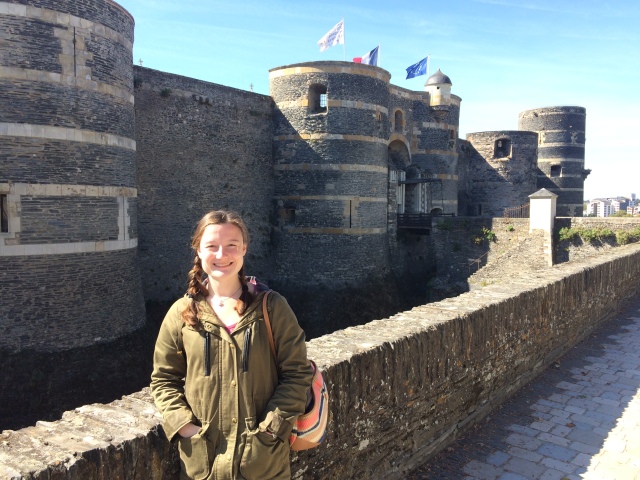

 Not Your Average Giraffe