A wee trip to Northern Ireland

Ever since I moved to the UK, I’ve wanted to visit Belfast, and by extension, Northern Ireland. I finally was able to get a trip organised, and managed to spend five days exploring Belfast, and other areas of the country. Here are some of the highlights!

Belfast City Centre

The city of Belfast itself was the main purpose of my trip, and I feel like I was able to cover much of the city during my visit. I lucked out with weather for much of the trip, and even managed to get a little sunburnt due to the unexpected sunshine. With the weather so nice, it meant that I was able to easily walk around the city, and truly enjoy the beauty of the city.

One thing that did surprise me was how early it seemed a lot of places, restaurants included, closed. Bars and pubs were open late, but when I first arrived and wanted dinner after 8pm, it didn’t seem like I could find many options.

Titanic Belfast

Belfast is broken up into several quarters, all offering their own insight into the history of Belfast. I started my time in Belfast off with a visit to the Titanic Quarter, making a visit to the Titanic Belfast museum. The tickets aren’t the cheapest, but I went through a Titanic phase when I was younger, so this felt like something I needed to do. The museum takes you through the history of the Titanic, starting in “boomtown Belfast” leading all the way through the repercussions of the Titanic’s sinking.

I almost found there to be too much information in some of the sections, and the recommended 2-3 hours almost felt like not enough time (although there were several groups from schools and cruise ships there while I was visiting). I spent over three hours going through all of the exhibit, but it’s really well done. I came away with loads of new information about the ship, and enjoyed my time in the museum (including a small shipyard ride!).

Included in the entry ticket is the ability to board the SS Nomadic, one of the tender boats that was used to board first and second class passengers onto the Titanic in Cherbourg, France. It’s not as in depth as the Titanic museum, but it’s worth exploring.

After finishing with everything my ticket granted me access to, I went into the Titanic Hotel next door to walk around. While the hotel has been modernised, and is a full service hotel, this was done with the requirement that some of the rooms be kept in their original state from when Titanic was being built. This means that you can see the draughts room, offices, and more – even if you aren’t a guest!

I also decided to treat myself to an afternoon tea at the Hotel, and it was a lovely experience!

Young woman sits behind a plate of desserts and scones at an afternoon tea at the Titanic Hotel in Belfast, Northern Ireland, UK
Always excited for an afternoon tea!

While in the area, I also managed to spot a Queen Victoria cyphered postbox! I always look at the cyphers on postboxes as I walk by, and Queen Victoria’s is one I haven’t yet seen “in the wild.” Not only did I finally get to see one in Northern Ireland, but I went on to find her other cypher near the Giant’s Causeway.

If you walk to or from the Titanic along the Maritime Trail, you’ll also come upon up to six stained glass windows depicting fan voted scenes from Game of Thrones. This is called #GlassofThrones, and was created in honour of the show that filmed for ten years in Belfast. Even if you aren’t a fan of Games of Thrones, they’re worth trying to find for the glass work, and stunning colors.

Young woman sits in front of stained glass depicting the Iron Throne from Games of Thrones in Belfast, Northern Ireland, UK
Found myself an Iron Throne!

Belfast City Hall

Located in the centre of Belfast is Belfast City Hall. The architecture of the big dome is reminiscent of Saint Paul’s in London, and surrounding the building are several statues of people of note. The highlight of the visit has to be the inside of the building. Not only are there a handful of beautiful stained glass windows representing pivotal moments in Belfast’s history, but there is also a 16 room exhibition of the history of Belfast.

Belfast City Hall in Belfast, Northern Ireland, UK
Belfast City Hall at Golden Hour

I was shocked at how in depth the exhibition was, and how much information there was about Belfast. Admittedly, it was more older history, and less modern history, but it was chock-full of information about the city, and how it has grown into what it is today.

You can also join a guided tour of the council rooms. The tour lasts an hour and has limited spots, but it’s worth an hour of your time to learn about the position of Lord Mayor in Belfast, and see how the 60 councillors of Belfast hold their meetings. The tours operate at set times, and you have to inquire about whether they have space – be sure to go early to grab a ticket (it’s free!) if you want to join one.

Councillors' chambers in Belfast City Hall, Belfast, Northern Ireland, UK
Councillors’ chambers in Belfast City Hall

Ulster Museum and Botanic Gardens

At the South side of Belfast, you can find the University, along with the large botanic gardens. Towards one corner of them sits the Ulster Museum, containing history of Belfast from prehistoric times to today. Due to its location, I only managed to get there about 15 minutes before it closed, so I sped off to the section about the Troubles and started there. I didn’t have much time, but what I was able to see was an interesting exhibition.

The Botanic Gardens were also lovely to sit in while the sun was out – I definitely lucked out with the weather during much of my visit!

St. George’s Market

If you’re in Belfast Friday – Sunday, St. George’s Market is open to explore. Inside they have countless stalls of food, souvenirs, as well as arts and crafts. It’s a perfect place to grab a bite to eat, or to pick up a memento from your trip.

St George's Market in Belfast, Northern Ireland, UK

Cab ride of Belfast Murals

Dotted around Belfast are murals depicting both Republican and Loyalist icons/scenes depending on where in Belfast you are. Booking a cab ride will allow you to be driven around to see them, while also hearing from someone who lived in Belfast during the troubles.

I had a Republican driver who told us all about how he and his family spend the troubles, and some history on how the IRA came to be during the time. I found any opportunity I had to learn about the history of Northern Ireland fascinating, and it was made even more so by being able to hear some first hand stories.

There are countless cab companies offering this experience, and I imagine they’re all fairly similar. I opted for a 60 minute tour, but you can book longer ones. If this is something you want to do in Belfast, be sure to book in advance to guarantee a time slot that works for you.

Coach trip to the Giant’s Causeway

In addition to spending some time in Belfast, I wanted to explore more of Northern Ireland itself. I booked a day trip via coach with McComb’s Coaches, and it was a wonderful time. It was a full day full of stops, but I had beautiful weather and a great coach driver that made it feel like it went by in a breeze.

The tour started bright and early, and quickly came to a photo stop at Carrickfergus Castle, followed by a drive along the coastal Causeway route (Antrim Coast). With the weather being so clear, we were able to see pretty far into the distance, and the views were stunning. We had another stop in Carnlough Harbour which is a small, fishing village. We then had another stop at Cushenden Caves – while it was nice to stretch my legs at this stop, I wasn’t as wowed with the caves as I was with other stops.

Irish flag at Carnlough Harbour, Northern Ireland, UK
You can use the flags flying in Northern Ireland to determine whether you’re in a republican or unionist area

Before lunch we had another photo stop at Carrick-a-rede Ropebridge, and in the far distance, we could even make out some of the Scottish coast. I wish I could’ve done the Ropebridge, but coaches aren’t allowed anymore, and you’d really need to make your own separate trip to do it. I brought a packed lunch for the lunch stop (where I got myself some Tayto crisps to try), and then we were off to the Giant’s Causeway – the highlight of the trip.

Carrick-a-rede rope bridge in Northern Ireland, UK
Carrick-a-rede rope bridge in the distance

I had no idea what to expect, and it was incredible. The nature trails down to the Causeway give you sweeping views across the Atlantic, and then walking around the Causeway itself is such fun. Although we had close to two hours to explore, it didn’t feel like enough time! My only complaint is that the Visitor’s Centre requires the purchase of a ticket, and the way they’ve set it up, you can’t even access the gift shop without buying a ticket. Luckily, the hotel next door has some souvenirs, but I was surprised that they wouldn’t let you buy a postcard or magnet without also buying a ticket (this was the same to access their cafe, too!).

The Giant's Causeway in Northern Ireland, UK
The Giant’s Causeway
View of Northern Irish coast containing the Giant's Causeway
Looking down on the Giant’s Causeway from the Red Nature Trail

From the Causeway, the way home stopped off with a quick photo stop at Dunluce Castle, a wee break at the Bushmills Distillery, and finally a longer stop at the Dark Hedges. I had expected the latter to be darker than they were, but I can imagine them being impressive when the trees were at full height. I know this is a popular stop due to its usage in Game of Thrones – while the tour had no affiliation with the show, we did get some background on its impact on Northern Ireland, and the driver did point out several filming locations throughout the day.

I’m so glad I did the tour, and the cost was great as well for what I got out of it. Our driver, Patrick, was also a great guide, always announced where the toilets would be, and made the journey that much more smooth (I can’t imagine driving some of those roads) and informative.

Day trip to Derry

As a fan of the television show Derry Girls, I knew I wanted to visit Derry when I was in Northern Ireland. It takes about two hours on the train to get there from Belfast, and on Sundays, they run a “Sunday Fun Day” ticket that costs £9 for any train journeys you can do on that day. For that cost, it felt like a no brainer to spend my Sunday in Derry.

When you arrive at the train station, you’re greeted by the Derry – Londonderry sign, and already the history lessons have begun. Derry comes from the Irish name for the city, but in the 1600s, the King added London to the city’s name (Londonderry) due to the city’s increasing population and funding from those from London. Today, both names are used interchangeably, although the preference may vary based on nationalist and unionist allegiances. That being said, Derry is used in conversation and in all the tourism related things.

I will say that not much is open in Derry on Sundays, but I was still able to see a fair amount. I entered the city on foot via the Peace Bridge, and then made my way to the walls of Derry. These date from when the city was a walled city, and you can walk the full ramparts while learning about the role the wall played in the history of the city, and most notably with the Siege of Derry.

Walls of Derry in Derry, Northern Ireland, UK
Walls of Derry

Thunder started rolling in at that point so I quickly hurried to the Bogside Murals to be able to see them all before the rain inevitably started. These are 12 murals commemorating the Troubles, and the city of Derry during that time. They represent the Battle of the Bogside, Bloody Sunday, and other people impacted by the Troubles. They’re all along the sides of buildings, standing at a tall height, and I found them all particularly striking. The walk ends at the “You are now entering Free Derry” sign.

Bernadette mural of the Bogside murals in Derry, Northern Ireland, UK
The mural Bernadette showcasing the Battle of the Bogside
Peace Mural – showing a peace dove emerging from an oak leaf (a symbol of Derry) representing hope for the future of the city and its people
You are now entering Free Derry sign in Derry, Northern Ireland, UK. At the bottom, there is a black three leaf clover, and a small Palestinian flag.
The sign is frequently updated to reflect current events or issues. Another Bogside mural can be seen in the background

As the rain had picked up by that point, I ran into the Museum of Free Derry. Entry was £8, and it was an incredibly informative museum. I’ll admit that prior to this trip I had limited knowledge about the history of Northern Ireland and the Troubles, and I had no idea how much Derry was impacted by that time period. The museum is well signed and walks you through how the Republican movement was impacted by the US’ Civil Rights Movement, what happened in Derry in the lead up to the Battle of the Bogside as well as Bloody Sunday, and how the British Army created such devastation with their handling of the city. I was also shocked to learn that Derry had been treated so poorly as a city after the division of Northern Ireland due to its mainly Republican sentiments.

After making my way through the whole museum, I headed to the Tower Museum (£4 entry) where they have an exhibition on the history of Derry from the prehistoric ages, an exhibition on the Spanish Armada, and finally an exhibition titled “The Derry Girls Experience.” I won’t lie that a lot of my motivation in going to Derry initially was down to my love of Derry Girls so naturally, this is where I headed first. They have props, costumes, and set pieces from the show, along with commentary from the writer of the show. It was very fun to see some of the show up close.

I did get to try some Tayto on my trip, so this prop/set piece stood out to me!

The historical bit of the museum was interesting, but I wasn’t able to spend loads of time in it as I had a train back to Belfast to catch (on Sundays, the trains run every two hours). I did have to skim through the more recent years, but having done the Museum of Free Derry, and all the other information I’d learned at that point in my trip, I felt like I had a good amount of that information already.

Young woman sits with hands in the air in front of a mural showing the five main Derry Girls characters
I had to make sure to visit the Derry Girls mural while in Derry!

Even though I know that I’ve still barely scratched the surface of Northern Ireland, I had such a wonderful time exploring some corners of it during my trip. I’m coming away from my visit having learned so much about the Troubles, and the history of Northern Ireland, and I’m always grateful to be able to learn more about the places I visit, especially when it’s within the country where I currently live. As they’d say in Northern Ireland, it was great craic!

Two (and a half) Days in Bristol

In part of my desire to explore more of the UK, I’ve been remiss in really visiting the Western side of the country (barring Bath, and a weekend in Wales). One city I’d yet to visit was Bristol, so I gave myself a long weekend, and went off to the Southwest of England!

Getting There

Bristol is a direct train from London Paddington station. It’s about two hours to Bristol Temple Meads, and then either a 15-ish minute walk, or 10 minute bus ride into the city center. I’d usually opt for walking, but given it was raining when I arrived, the bus it was!

A first half day in Bristol

Even with a morning train, it was around 1pm by the time I was able to actually head out into Bristol. I started in the Old City, and continued on by foot to the Clifton Suspension Bridge. It was a decent walk that was hindered a little by rain, but I do love a good walk. The Bridge itself is easy to cross, and free to do so. It’s a small, one-way walkway, and you can walk down one side, and return the other. The views of the gorge and the Avon river are incredible, and I was glad that the weather had cleared a little so I could see out into the distance. There’s a museum dedicated to the history of the bridge, but that wasn’t really of interest to me.

Young woman standing in front of Clifton Suspension Bridge in Bristol, England, UK

What was of interest, however, was heading to the Observatory to see the views from up there. Not only that, but you can head down 130 steps into The Giant’s Cave, which leads you out onto a viewpoint. The steps down are steep and narrow though. It costs £4 to head down, and there is an additional cost to go up into the Observatory, but they waived it on the day I visited on account of the weather. It’s a fun different vantage point from which to view the Bridge. There’s also a cafe in the Observatory, so I treated myself to a nice hot chocolate to warm up because it was a bit chilly at that point!

The walk back through the hotel passed through a little Christmas Market in Old City, and a chance to see some lights.

Festive tea and more views

For my only full day in Bristol, I’d booked in an Afternoon Tea at The Ivy, so needed to occupy my day up until that point. I’ll admit I did some shopping in the morning, but then headed over to the Cathedral to see it. Unfortunately, I wasn’t allowed in due to graduation events happening that entire week, so I only got to admire the outside. As consolation, I decided to head over to Cabot Tower, and climb that – because who doesn’t love a tower to climb??

Cabot Tower is located in a park, but once you find it, it’s free to climb. The steps are narrow and steep, but at 110 odd steps, it’s a shorter tower than some I’ve climbed. You get 360 degree views from two viewing platforms, but since it was such a windy day, it wasn’t super pleasant to be up there. I took some photos and headed down to avoid getting to wind whipped!

View from Cabot Tower in Bristol, England, UK

From there, the walk to The Ivy wasn’t a super long one, and I had a lovely festive afternoon tea. Of course, there were scones with clotted cream and jam, but the sweets were really the festive highlights. They had a red velvet chocolate cake complete with Santa hat, a gingerbread cake, and even some mini mince pies!

Festive desserts at afternoon tea at The Ivy in Bristol, England, UK. There are four cakes - two red velvet cakes topped with red sprinkles, cream, and a red Santa hat. The other two are gingerbread cakes topped with white snow like cream, a twirl bar, and a chocolate pine cone

SS Great Britain and Brunel

For my final day in Bristol, I felt it was important to see the SS Great Britain, and dive into Brunel’s full footprint he left in Bristol (he also designed the Clifton Suspension Bridge). There is an entry fee associated with visiting the SS Great Britain, but tickets are valid for a year, so you can return as often as you’d like!

Tickets get you entry into exploring all different aspects of the ship. I started off by heading down into the hull of the ship to examine how they’re keeping it put together, and the engineering of the time. While it is falling apart, it’s cool to see how they’re keeping it together. Not only that, but to also see the years of wear on the ship’s build.

SS Great Britain in Bristol, England, UK

After visiting under the boat, it was time to head into and onto the boat. You start in a museum that takes you back in time to all the important years of the ship’s history. It’s very thorough, and you could spend a long time there. All of the information prepares you to finally step onboard the SS Great Britain, and to see the inside of the ship. You can even take little identity cards that tell you about passengers from first, second, and steerage class. You start on deck, and can see the demarcation line where non first class passengers weren’t able to pass. It’s hard to imagine how crammed it would’ve been! You can also head into the ship itself to explore first, second, and steerage class cabins, as well as communal rooms. You can even go into the engine rooms, and see where they stored the military horses. The rooms are filled with mannequins (which I never quite trust), as well as sounds so you can hear conversations, or announcements that may have taken place onboard.

Once you finish with the ship, there’s also another museum dedicated entirely to Brunel. You can learn about his childhood, his ventures, and what led him to engineering the SS Great Britain. You can also learn about some of his pioneering work, including a propeller engine, and the debates that were had over such changes. All in all, you could easily spend at least half a day there, and still potentially have not read every sign!

Ironically, for lunch I had a throwback to my trip to Portugal early in the year! There’s a Portuguese cafe in Bristol (Bath and Cardiff as well), and they were serving not only natas, but my favorite Portuguese dish, so I couldn’t resist having lunch there. With that having fortified me, I was ready for my return train journey to London after a successful visit to Bristol!

A Quick Weekend in Wales

One of my big UK bucket list items has been to visit Wales. When I was studying abroad, I did a quick coach day trip that took me to Tintern Abbey, and allowed me to jump between Gloucester and Monmouth (one foot in Wales, and one foot in England, as it were). Ever since then, I’ve wanted to see more. This year, when I was presented with the opportunity to head back to Wales for a 36 hour coach adventure, it seemed like a no brainer!

Day One

The day started bright and early with the coach departing at 7:45am, with a quick stop at a service station en route. As soon as you cross into Wales, the signs are in Welsh and English, and all throughout the trip, I kept looking to find the Welsh signs. I respect the continued effort to revitalize the Welsh language, and make it once more as spoken as English. It truly is a beautiful language.

The first stop of the day was Caerleon Roman Amphitheatre, which is impressive, although not to the extend of some other amphitheaters I’ve seen. There are also barracks around, and it’s always fun to see ruins from a time that pre-dates the US by several centuries. There’s also a museum, and around the corner, Roman baths. It was a nice stop to stretch the legs, and take in some history!

Caerleon Roman Amphitheatre in Wales

Lunch was in Cardiff after a quick stop at Cardiff Bay. A lot of Doctor Who and Torchwood are filmed in that area, so it was neat to see them in person, and to recognize them from certain episodes. I ate lunch in the grounds of Cardiff Castle, and while I didn’t go in, it was a lovely little picnic location. I’ve already put Cardiff on my list of cities to visit again, because I didn’t get that much time there, and I feel like there’s way more to explore there!

Cardiff Bay in Cardiff, Wales
Fully expecting the Doctor to just pop out at any time!
Young woman stands in front of a statue of a red dragon at Cardiff Castle in Cardiff, Wales
I couldn’t not take a photo with a dragon in Wales!

A quick drive away is Caerphilly Castle, and it is an impressive sight. It’s surrounded by water, which on its own is a cool thing to see, but then the ruins themselves are fascinating to explore. It’s Wales’ largest castle, and the second largest castle in Britain (second only to Windsor), and as a Medieval Castle, the fact that so much of it has survived is astonishing. There’s even a leaning tower of sorts (which they call wonkier than Pisa). While wandering through the ramparts, we came across a beautiful double rainbow, and that just added to the mythical, magical feel of the castle.

Caerphilly Castle in Caerphilly, Wales
You can spot the leaning tower on the right!
Young woman wearing glasses smiles in the foreground with a double rainbow in the background at Caerphilly Castle in Caerphilly, Wales

Day Two

The first stop of the day was the Big Pit National Coal Museum in Blaenafon. What was once an active coal mine, is now a museum where you can learn all about the coal mining industry in Wales, and the impact coal mining had on Wales’ economy. The highlight of the museum is the opportunity to join an underground tour, and head down into the mines themselves. You get kitted out in a hard hat, complete with headlamp, and then head down the shaft 300 feet below the ground. The tours are led by ex-miners so you get first hand accounts of what the experience of working down a mine would’ve been like for them, but also for their predecessors. I found it fascinating to learn about it all, and to get to do so in the mine itself. The tour itself was a little daunting, especially with the descent into the underground, and the fact that you aren’t allowed to bring anything down there that has a battery, but I’m so glad I did it. If you plan to do the underground tour while visiting the museum, be sure to wear warm clothes, and wear sturdy shoes – at one point you walk directly into the air being pulled in to ventilate the mines, and depending on the temperature outside, that air may not be very warm!

Big Pit National Coal Museum in Blaenafon, Wales

Once resurfacing, the museum also has exhibits about the process of coal mining, baths, and other buildings used when the mine was operational. They do also have an audio-visual experience you can do if you’d rather not go underground. Be sure to also visit the gift shop to pick up some traditional Welsh items such as lovespoons, or even items made from Welsh coal! I picked up a magnet of a Welsh dragon, made out of Welsh coal, and handmade in Wales, which felt like the perfect souvenir for the trip.

After a quick lunch in Monmouth, the final stop of the weekend trip was Tintern Abbey. I first visited in 2016, so it was nice to go back again, and to revisit the Cistercian Monk Abbey ruins. The architecture is beyond impressive, and beautiful. The whole area seems unreal, especially when you see modern day houses in the distance, and surrounding the abbey. It was the perfect ending to an introduction to Wales.

Tintern Abbey in Wales

All throughout the drive, we crossed through beautiful autumnal colors, and that alone has made me want to revisit Wales. I can wholly understand why so many people holiday there, and I know that I barely scratched the surface of it. I hope to be back very soon, and to be able to explore more of Wales’ incredible landscape and history.

Diolch Cymru!

A quick trip to Dover and Canterbury

As much as I love London, I know that the UK is more than just its capital city. Now that I’m here on a longer term basis, I’ve made it my goal to explore more of it, and to check off those bucket list sights that I’ve not seen before. It’ll probably take me a while to get through all of them, but I figured that the Cliffs of Dover, and passing through Canterbury would be a good start.

Getting to Canterbury and Dover

From London Saint Pancras, the train journey to Canterbury is around 50 minutes to Canterbury West. You can also take the slower, commuter train from Victoria, which can take anywhere from a little over an hour, to two hours, and arrives into Canterbury East. Typically the slower train is a little cheaper, but I’ve got a Rail Card, so they were around the same price, which meant I opted for the higher speed version. The train was headed to Margate, but I got off in Canterbury initially as my “home base” for this quick trip.

From Canterbury to Dover is around 30 minutes, and that service runs every half hour out of Canterbury East. It made a fair number of stops between the two, but then finally, I arrived in Dover. Much to my dismay, it was raining, and grey (which isn’t uncommon for England at this time of the year, but I digress), and didn’t look at all like a good day to see the cliffs. Nevertheless, I’d made the journey out to Dover, so I was going to continue on to the cliffs. When the weather is nicer, you can do the 40-60 minute walk up to the cliffs, but given that the skies were not playing ball, I took a cab up to the visitor’s centre at the cliffs. It was only around £8, and worth it for keeping me dry for the journey.

The Cliffs of Dover

The sight I came to see. The visitor’s centre doesn’t look like much when you first arrive, but it’s got a lovely cafe inside, a shop, and very helpful National Trust employees who can offer you tips, or just a kind word. I got a map with the different view points, and was told that a short ten-minute walk away would be the first viewpoint of the cliffs. I was told that view is essentially what you get the whole way, and also not to go too far beyond that as it would be very muddy (I wasn’t dressed for a jaunt through the mud). I started out and within minutes it began hailing, with biting winds. Not exactly a warm welcome! Quickly turning around, I decided to hunker down in the visitor’s centre with a scone with clotted cream and jam to see if I could wait out the passing squall.

Eventually, blue skies appeared in the distance, and it looked like the rain might hold off for a little. I bundled up again and headed out to the first viewing point and there the cliffs were! They were absolutely stunning in person, and I’ll admit I spent quite a bit of time taking photos as there was nobody else around – when will that ever happen again?? I can see how walking further along would get you closer, and I know there’s a lovely trail that takes you all along the coast, but with the weather not being able to decide whether it would stay dry or not, and the ever growing mud, it seemed prudent to not go much further. I couldn’t see France due to the weather (on a clear day, you can see it), but I watched the ferries coming and going. One day I’ll have to do the ferry to get that stunning view from the Channel as well.

Young woman in a blue coat and scarf points to the white cliffs of Dover in Dover, England, UK
Still not (D)over seeing the cliffs in person!

After I’d taken my (far too many) photos, I went back to the visitor’s centre to peruse the gift shop. I got a National Trust book of scone recipes, which I’m excited to try out, and then called a taxi to head back to the train station. I had thought about doing Dover Castle, but according to the National Trust employees, you need at least half a day for that, and given how long I’d spent waiting for the rain to pass, I didn’t have that much time left. Next time!

Canterbury

Coming back into Canterbury, the rain had started up again, so I made my way to Canterbury Cathedral. Entrance is £14, and then you can visit all that the cathedral has to offer. It’s unfortunately under a fair amount of scaffolding at the moment, but you can still admire its grandeur. I was told to first start outside to see the (what looks like new) sculptures of Queen Elizabeth II and Prince Philip. I’m not sure when they were done, but the color of the material is different than the rest, so you know it’s more recent that the rest of the building (although yes, I know the cathedral very much predates all recent monarchs).

Canterbury Cathedral in Canterbury, England, UK
Canterbury Cathedral, pictured with some of its ongoing construction
Sculptures of Queen Elizabeth II and Prince Philip outside Canterbury Cathedral, England, UK

Inside you have the place where Thomas Becket was murdered, as well as the tombs of the Black Prince and Henry IV. They’ve also got some exhibitions of the progression of the church in England, including the Black Prince’s armor (recently returned from the V&A), Bibles from Henry VIII’s time, and more. I also found it fascinating how much graffiti there was in the cathedral, dating back centuries. It’s lovely to see that’s been preserved. You can also walk around outside in the cloisters. I, for one, always love looking at the stained glass in cathedrals, and Canterbury Cathedral certainly doesn’t disappoint on that front.

Shrine of Thomas Becket in Canterbury, England, UK
Inside the Cathedral

There are a few other things in Canterbury I didn’t quite get to due to time constraints, but luckily for me, it’s not too far away from London, so I can easily get back to see what I missed, and head back to Dover for the Dover Castle. Here’s to more UK adventures!

Ending 2021 (and starting 2022) in Porto

After finishing my time in Lisbon, I headed up north to Porto. Unlike Lisbon, I’d never been to Porto before, and I was excited about exploring a new city with a different vibe. It’s about a three hour drive from Lisbon to Porto, and after showing my negative Covid test to check into the hotel by Estádio do Dragão, I was ready to hit the town!

Exploring Porto

My first day in Porto, I ended up having to uber into the city as there was a strike on the metro that had closed all but one line (and of course, that one line didn’t go through Estádio do Dragão). It was only 4.89€, and it didn’t take too long to be dropped off at Trindade, though. From there, I did the 15 minute walk to Igreja dos Clérigos. This is a large Catholic Church, but the real reason for visiting was to climb the tower (I can’t resist a tower climb)! It’s 197 steps up (and back down again, of course), but there’s also a museum before you start the big climb so you don’t do it all in one go. Tickets are 6€, and while I wasn’t entirely interested in the museum, the view from the top of the tower was absolutely worth it. By sheer luck, I got to the top of the tower for sunset, and got to watch the sun dip below the horizon with the roofs of Porto beneath me. The tower has two outdoor viewing areas, and you can spend as much time as you want while up there. The tower also has night tickets you can get to climb the tower at night.

View of Porto at sunset from Igrja dos Clérigos in Porto, Portugal
Sunset over the roofs of Porto

I wandered around after my arduous climb trying to find dinner, and was surprised to learn that Porto leans towards Spanish hours for dinner! Looking around at 6:00pm, very little was open, which was very different from what I’d experienced in Lisbon! I did eventually find a nice restaurant on Rue das Flores around 7:15pm, and had my favorite: bacalhau à braz.

Christmas tree made of lights in Porto, Portugal
Even after Christmas, the lights are still on show!

On the last day of 2021, I started my morning bright and early with a trip to get a Covid test in preparation for my return to the UK. The testing center was right next to the Livraria Lello, known as one of the most beautiful bookstores in the world. It’s rumored to have inspired Hogwarts, but even if it didn’t, it’s worth the visit just to admire the interior. Tickets cost 5€ online, 6€ at the door, but if you purchase a book inside, you’ll get the 5€ back in the form of it being taken off your total. You’ll have to wait in a queue as they limit the customers inside, unless you purchase a more expensive priority ticket to skip the queue. I purchased my tickets while waiting for my Covid test, and I saw many people purchasing them while waiting. I found the queue moved fairly quickly, and then I was inside! You’re greeted with ornate ceilings, a spiraling red carpeted staircase, and so many books. It’s a functioning bookstore, so I bought myself a Livraria Lello edition of Pride and Prejudice, which I was able to get stamped with the Livraria Lello stamp – a unique souvenir I think!

Livraria Lello in Porto, Portugal
Livraria Lello

After admiring the bookstore, I thought it was time to check out the Dom Luís I Bridge that spans the Douro River. There are several bridges along the river, but this one is definitely striking. I accidentally initially ended up on the riverfront (in the Ribera neighborhood), which wouldn’t allow me to cross the top level of the bridge, so ended up taking the Funicular dos Guindais up. This funicular isn’t covered by the Andante card (the card you use on public transport in the city), so it is an additional cost, but given there aren’t any funiculars in London, it’s worth it to try at least once.

Young woman stands on the Dom Luis I Bridge in Porto, Portugal
Finishing out 2021 with beautiful views (and sunshine)!

From the top, it’s a bit of a walk before you can get onto the bridge. The upper level is reserved for pedestrians and the metro, so you don’t have to worry about car traffic. You get beautiful sweeping views of the Douro River stretching out on both sides, and the hills of Porto. The bridge crosses you over into Gaia, and on that side of the river is where you’ll find all the port makers. There’s also a cable car you can ride! I ultimately crossed back over to head back down to the Ribera neighborhood for lunch along the river. After lunch, I found Gelatopia while wandering – a gelato chain that served pastel de nata flavored gelato! I couldn’t say no to that!

Young woman stands on a cobblestoned hilly pavement in Porto, Portugal
Heading back down to the riverfront from the top of the bridge

As part of my last day of the year, I went to catch a glimpse of the beautiful tiles in the São Bento train station. Half the entrance is under construction, so I couldn’t get the full effect, and I can only imagine what that would be. I watched the final sunset of 2021 from the viewpoint just outside Igreja do Carmo before heading back into the center for dinner. All New Year’s Eve festivities had been cancelled due to the pandemic, and you could tell in how few restaurants were actually open for dinner. Even the restaurant where I ate said they were endeavoring to close the place down by 10pm! I do wonder though if that was down to there being no public events, rather than how it typically is on New Year’s Eve.

With no celebrations, I rang in the new year in my hotel room, with the sounds of fireworks ringing out from across Porto.

A day trip to Aveiro

With January 1 being an observed “holiday” in Portugal, nothing was really open in Porto in the morning. As such, I opted to do a little day trip to Aveiro, about 57km south of Porto. Aveiro is also very close to the coast, and during the summer I hear is a bustling tourist city! Upon arriving, the city was very quiet, with very few people milling about, and much seemed closed. By the time I’d finished lunch though, it was clear that the city was waking up, and things were opening. By the time I left, it felt very crowded, and I can only imagine what it’s like in the summer!

Boats on the canal in Aveiro, Portugal
Aveiro is well known for its river

One of the must-dos in Aveiro is to take a boat ride on the river. There are several different companies all along the river, so you can pick the boat that speaks to you the most! The tour lasted about 45 minutes, and you get to not only get a lay of the land (as it were), but also see the bridges, and locks along the canal. We got a bit of history about the salt trade in Aveiro, but not as much as I would’ve liked.

Young woman in a pink mask and grey scarf in Aveiro, Portugal, with a bridge behind her
Reaching the end of the river, and the locks that keep the river level steady

In line with how the rest of this Portugal trip has played out, I had to finish the day in Aveiro with a sweet treat. Aveiro’s signature dish is something called ovos moles, which has no direct translation, but is a pastry made of egg yolk and sugar. They’re shaped like barrels, and they originate in Aveiro, so it only made sense to try them there! They weren’t as appealing as a nata, but I’m glad I tried one!

Ovos Moles from A Casa dos ovos moles de Aveiro in Aveiro, Portugal
Ovos Moles

Returning to the UK

As much as I wanted to stay in Portugal (the weather for one is appealing – 16 degrees C in January!), work in London was calling. In order to return to the UK, I had to have a negative Covid test taken within two days of departure. I also had to fill out the UK Passenger Locator Form, and prebook a day two PCR test. Porto has an airport, but to get back to Heathrow, I had to transfer in Lisbon. I made it to Lisbon, and the gates were just about to open for boarding when my flight was cancelled, which is exactly what every traveler wants to hear. I ended up having to wait in the Lisbon airport for over eight hours, but that’s a story for another day!

All in all, I had an amazing time starting off my 2022 in Porto, and throughout my whole small holiday in Portugal. I’m very grateful I was able to do it, and I hope I’m able to return to Portugal again one day!

Young woman stands in front of Christmas decorations in Porto, Portugal
Portugal was a wonderful place to start 2022!

Natas, codfish, and the sea… a few days in Lisbon!

With Christmas falling on a Saturday this year, and Boxing Day on a Sunday, UK residents were treated to a four day weekend this year. Given I also had some annual leave I needed to take, it made perfect sense to try and make the most of that time off, and head somewhere outside of London. With that in mind, plans to travel to Portugal were hatched. Before I dive into it all, I do want to clarify that I made these plans well before Omicron popped up, and that I was still somewhat hesitant about it all.

Lit sign saying Boas Festas on a roundabout in Lisbon, Portugal
Happy holidays from one of the many light displays in the capital

Pandemic Restrictions in Portugal

Let’s start with the most stressful aspect of travel at the moment, and that’s travel restrictions. Mask mandates are in place in Portugal inside in all circumstances (at the time of writing and while traveling), and I was pleased to see how well this was adhered to, both on public transport and inside, but also just in general when out and about (especially when compared to London). Shortly before I flew into Lisbon, Portugal changed their restrictions such that in addition to mask wearing, in order to eat in a restaurant (or check into a hotel), you needed to present a negative Covid test (taken within the last 48 hours for antigen tests, and 72 hours for PCR tests). This applied to everyone, tourist or resident, vaccinated or unvaccinated, and tests could be done in labs or pharmacies. While in Lisbon, I had two antigen tests done, one that cost 30€, and one that was free. In the few times when I ate inside (weather was mild enough for eating outside, even at night while I was there), they did ask to see my negative test. These restrictions were put into place as preventative measures to keep case numbers down, but it still speaks to what things are like in Europe at the moment.

In terms of entry requirements for Portugal, I had to have a negative PCR covid test taken within 72 hours of departure (48 hours for an antigen test). I also had to fill out a Passenger Locator Form, and both of those documents were checked before I was allowed to board. My negative test was also checked again when I landed in Lisbon before I was able to clear immigration. I wasn’t asked to show my proof of vaccination until I got to the hotel on that first day (and was actually only asked for it at the Time Out Market outside of the hotel).

I will say that I was impressed, and pleased, to see that people in Portugal actually wear their masks inside, on public transport, and generally just out and about. This is so different than what it’s like in London, and while cases are spiking in Portugal (as they are in most of Europe currently), they still are doing the best they can to keep their fellow citizens safe.

Bem vindo a Lisboa!

My first full day in Lisbon was a Sunday, so already a more quiet day than most (not to mention that I arrived on Christmas Day, so things were pretty quiet then as well). The morning started out early with a trip to the pharmacy to get an antigen test since my PCR from London had expired, and I wasn’t sure how many places would ask for the negative test. Going to a pharmacy, it only cost 30€ for an antigen test, with a turn around time of 2-3 hours (I did my test at 11:45am, and had the results shortly before 2pm so can’t complain about that)! I did, however, have to have an appointment (I used a walk in pharmacy a few days later and the wait time was about the same, only the waiting was to get in for the test rather than for the results themselves… that one was free though so the wait was worth it)!

While waiting for my test results, I wandered down through Rossio Square, and onto Rua Augusta to find my favorite store in Lisbon: Fábrica da Nata. Eating a fresh Pastel de Nata was top of my list of things to do after coming back to Lisbon, and they didn’t disappoint. A warm nata absolutely cannot be beat in deliciousness.

Young woman in a blue coat and grey scarf sitting in a chair. She's smiling, and holding a pastel de nata in her hand. There's a box on the table in front of her that says Fabrica Da Nata.
The first (of many) natas!

After some delectable natas (I dread to think how many were consumed over the course of this trip), I continued my walk down to Praça do Comércio, which had a large Christmas tree in place. The weather wasn’t lovely (it rained pretty much on and off all day, plus some wind on the side to make it less enjoyable to be outside), so standing outside on the waterfront wasn’t super appealing. I did randomly find the Centro Interpretativo da História do Bacalhau, though, in an effort to seek shelter, and decided to give it a visit. It’s an interactive center dedicated completely to the history of codfish in Portugal, and while it was completely empty inside, it was very interesting! The museum is full of videos, immersive experiences, and projections to help you navigate the intricate history Portugal has with codfish, and to learn about codfish all over the world. Entry is only 4€, and the museum is pretty new (it opened in July 2020), but I’d absolutely say it’s worth a visit!

Young woman in a pink mask sitting behind a cardboard cutout of an orange dory boat at the Centro Interpretativo da historio do bacalhau in Lisbon, Portugal.
You even have a photo opportunity!

To finish off the day, I visited the Money Museum, which isn’t far off the Praça do Comércio. It’s located in an old church, and is way more vast than I could’ve imagined. The museum is completely free, but you’ll be issued with a ticket that you can use to partake in interactive quizzes, games, and elements to enhance your visit. For being a free museum, I was really impressed with how much detail there is. I will say that some of the explanations went over my head, and there is a certain amount of Portuguese history you’re kind of expected to know to properly contextualize things, but it’s still fascinating. I thought it was well worth the visit, and is an interesting insight into the financial history of Portugal!

A day in Cascais

For all that Lisbon has to offer, there are a fair number of places to explore on short day trips outside of the city. The last time I was in Lisbon, I did a day trip to Sintra, and spent a day out in Belem, so it made sense to do another! This time I ventured out to Cascais, a beach town about 40 minutes from Lisbon. Getting there is pretty easy: you take the train from Cais do Sodré, which terminates in Cascais. It’s a commuter train, and costs 5€ return. Trains run every 20 minutes. You get a lovely view of the coast as you journey into town, and then come out onto a beach town.

The first stop of the day was the Boca do Inferno, a 30 minute walk from the center of town. It’s a massive rock archway over the ocean that is constantly hit with crashing waves. The view wasn’t quite what I had expected it to be, but the waves were impressive, and it did make for an interesting sight to see. The walk through town also led past some adorable Christmas decorations, wishing the town Boas Festas.

Boca do Inferno in Cascais, Portugal
Boca do Inferno

Upon arriving back in the heart of the city, I decided to scope out some lunch. Based on a combination of wandering and TripAdvisor searching, I settled on O Pescador to have a fish dish, because that’s what Portugal is known for, so why not (and I was on the coast, so it was even more fitting)! I had the Bacalhau À Braz, which is fried fish in scrambled eggs and topped with the thinnest French fries. It was absolutely delicious, and I can now say I’ve had cod in Portugal!

Bacalhau A Braz from O Pescador in Cascais, Portugal
My Bacalhau à Braz, which quickly became my favorite dish of the trip!

After a very filling lunch, I walked down to Rainha’s Beach to step foot on the sand, and then along the promenade to Estoril. The walk is about 2km from Cascais, along the boardwalk where you can admire the waves crashing into the structures along the boardwalk, pop down to various beaches, and even catch some people trying to surf! Upon arriving in Estoril, the train station is just along the boardwalk, and from there I hopped on the train back to Lisbon.

Young woman in a yellow jumper and grey scarf stands on the boardwalk in Estoril, Portugal
*Sea* you later, Cascais!

After a long day of walking, I figured it would be a great way to finish the day by doing some more walking down to Praça do Comércio to see the Christmas lights. Unfortunately, the tree wasn’t lit up, nor did it seem to be on the way to doing so. The streets were well lit, though, and an evening treat of a delicious nata was an excellent reward to a day of over 25,000 steps!

Learning to make natas

If you’ve not figured it out already, one of the must eats in Portugal (and one of my favorite pastries) is a pastel de nata. It’s a puff pastry filled with egg custard, and each bite is divine. As a way to make this visit to Lisbon more unique than the last, I booked an AirBnB experience of a baking natas workshop! It was 90 minutes, and our small group went through the whole process from start to finish, and we even got to consume the natas at the end of the bake. We all got to try our hands at various stages of the process, and it was super interesting to get to see how they’re made (and of course, to enjoy them at the end).

Selfie of a young woman holding up a pastel de nata close to the camera
Taking a selfie with one of the natas my cooking class group made together!

Further Lisbon explorations

In addition to everything I did on my first day in Lisbon, I also managed to get in some steps around the city. I went up the Santa Justa Lift (5,50€ roundtrip), the Ascensor da Bica funicular, visited the Gulbenkian Museum (which has discounted rates for under 30s), and popped into the Time Out Market (which required proof of vaccination). The Christmas lights were also still up, so I was able to enjoy those as well.

Christmas lights in the Praca de Comercio in Lisbon, Portugal
Praça do Comercio complete with Christmas tree and smoke from roasting chestnuts!

Pandemic worries aside, I had a lovely time in Lisbon! It’s such a fun city to visit, with so much history and so much to do. I’m glad I was able to come out, and I will say that the requirement for having a negative test, even though I wasn’t asked for it frequently, was a stress reducer. Testing every two days gave me some relief of having a negative result while I was out and about, but I did wear an FFP2 whenever I wasn’t eating. For the last few days of my holiday, I left Lisbon, but stayed in Portugal. Next stop: Porto!

Young woman smiling with ocean and bridge behind her in Lisbon, Portugal
Sunset on my time in Lisbon!

A day in York!

One of the things I’m most excited about now that I’m living in London, is being able to explore the rest of the UK. For all the time I’ve spent in the UK, I’ve managed to not actually get to too many places outside of London, and I’m hoping to change that now. The first place I decided to visit? York!

From London, it’s an easy two hour train journey to York. I did have a slight adventure in that my initial train was cancelled, but luckily there was another one departing half an hour later and I was able to just hop on that one. I rode on LNER, and while I was disappointed in the lack of mask wearing on board the train, the journey up to York was comfortable and easy – they even have outlets between the seats so you can charge your devices! I left from King’s Cross in London, and arrived into York (there’s only the one train station in York so that makes booking tickets pretty easy).

Welcome to York sign in York Railway Station
A lovely welcome at the train station!

From the train station, it’s an easy walk into the city centre. You can also take bus 66 if you’d like, but I found that it was really easy to navigate around on foot (if you’re trying to get from the train station to the university, though, it’s about a 40 minute walk so if the weather isn’t nice, bus 66 is a quick and dry way to get there – one way journeys cost £2 but can be paid with contactless card).

My first stop was to visit York Minster, arguably the most famous thing to visit in York. I’m not sure if it’s down to Covid or if it’s always been like this, but you have to prebook tickets to gain entry into the Minster. You can opt to purchase a basic entry ticket, or a guided tour. For an additional £5, you can add on the Tower Challenge for a chance to climb up the Central Tower. If you’ve read my blog before, you know that I love a good tower, so I couldn’t resist booking myself this ticket. Regular entry slots are available every 15 minutes, while tower slots are every 45 minutes. I booked my entry slot to be 30 minutes before the tower so I could look around, but not feel rushed (you can also continue looking around after you climb the tower so you could book them for the same time and have no issues). The Minster itself is beautiful inside and out, with stained glass everywhere, and as some of the construction dates from the 7th Century, it’s full of history. There are seven main spots to make sure you visit while walking around inside: the Nave, Chapter House, Great East Window, Crypt, Quire, Rose Window, and the Central Tower (which is what you climb). There’s also the Undercroft Museum, which houses Roman and Viking artifacts under the cathedral, but unfortunately that was closed when I visited so I wasn’t able to see it.

Photo of the front of York Minster in York, England
I think probably 90% of my photos from York are of York Minster

I personally felt like half an hour was a good amount of time to walk around and see everything (I did manage to get in a few minutes before my entry time so I had a bit more than 30 minutes), but I can easily see how you could spend hours there, especially if doing it with a guide. Five minutes before my tower ticket slot, I went to the meeting point and waited for a Minster employee to come get all of us (I’d say there were 20 people, and the sign said our time slot was sold out, so if you’re wanting to do this, absolutely book in advance – I booked the night before, but the earlier the better. In theory you can buy it in the Minster on the day, but I heard them telling patrons the remaining slots were booked, so they still might be sold out). We were given a brief explanation of the fact that we’d be walking up 275 steps (that get increasingly narrower and narrower), and therefore anyone with health conditions shouldn’t ascend. The woman who warned us of the steep ascent wasn’t kidding – it’s 275 spiraling steps (I would say I counted, but they’ve written the number of steps every 25 steps so you can see how close you’re getting to the top). There’s one section around step 125 where you come out onto a section outdoors that gives you some lovely views and fresh air before you’re back into the ever narrowing staircase. Right towards the top, I had to move my purse to in front of me in order to fit properly – it certainly did get narrow, and the steps did as well. I’m glad I have small feet! The view at the top, though? Absolutely wonderful. I lucked out because the weather in York was truly beautiful all day while I was there, so I had a sweeping 360º view of the city’s skyline. Despite the fact that my ticket slot was only for 45 minutes (it took probably close to 15 minutes to do the full ascent as you can only move as fast as the person in front of you, and you’re asked to maintain some space between each other due to Covid), I didn’t feel rushed at all once I was at the top. From 72m up, it’s well worth the slightly intense journey to get up there, and there are placards on all four sides to tell you what direction you’re facing, and what’s in the distance. You do go down the same stairs you came up, and while it wasn’t as strenuous going down, I found it scarier!

View of York Minster, and the city of York beyond from the top of the Central Tower in York, England
One of the four views you get from the top of the tower. On a clear day, it feels like you can see forever
View of York Minster's spires from the climb up the Central Tower in York, England
From the small non spiraling staircase break you get, you can examine some of the Minster’s architecture

Once back down on ground level, I decided to treat myself to a “York Minster Tower Champion” badge to commemorate not only the lovely views, but also my day in York. I mean, they do call it the Tower Challenge, so it only makes sense to have some kind of prize at the end of it! It was £3.50 for the badge, but I thought it was cute, and where else will I be able to get that? I also hadn’t seen any bloggers mentioning it, so here I am doing that!

Badge with Central Tower of York Minster that says "York Minster Tower Champion"
My Tower Champion Badge!

After York Minster, I wandered down to the Shambles Market, which is an iconic market and alleyway in York. It’s rumored that the Shambles is what inspired Diagon Alley in Harry Potter, and even if that’s not ultimately true, I can see why you’d think that! There are 70 food stalls, clothing stalls, locally owned businesses, and more in the market, and it was certainly buzzing on a Friday afternoon. You can also find a lot of tea rooms around the Shambles if you fancy an afternoon tea or a cream tea, and plenty of other eating or drinking establishments.

Arching sign that says "Shambles Market" at the entrance to the Shambles Market in York, England
Shambles Market
Streets of The Shambles in York, England
I can see the Diagon Alley inspiration rumor being true!

From the Shambles, it was a quick walk over to the Jorvik Viking Centre. Created by the York Archaeological Trust in 1984, this attraction is designed to take you back in time to the time of the Vikings living in York, which at the time was known as Jorvik. Your visit starts out in a room with glass floors, which showcases the ground below as it had been excavated. There was a guide there dressed in Viking attire (all staff in the exhibit area do, although ironically, they were all wearing masks that matched their outfits. As I overheard one other guest say “I’m sure Covid was big in the Viking era” – might not be entirely accurate, but I appreciate their dedication to keeping guests safe, even if it throws off the authenticity a little). Your journey back into time starts with an animatronic ride where you get in a buggy, and then spend 15 minutes learning about the different houses, partial skeletons, and artifacts found on Coppergate Street. They’ve reconstructed what Jorvik might’ve looked like, and the narrator will tell you all about how they know that fabric dye was used, or that pigs were kept (and eaten), and much more. I thought the ride was pretty interesting, although I’ll admit it was a little distracting when the mannequins spoke in Old Norse while the narrator was telling me in English about something. When the ride ends, you visit a museum that contains the artifacts spoken about during the ride. You’ll see jewelry, combs, fabric, skeletons, and more. You can even purchase a coin for £2 that will be struck for you there and then! I did find my visit interesting, but I’ll admit that I was expecting a little more from the museum part itself, although I wasn’t prepared for the animatronic ride! The ticket I bought is valid for 12 months though so if I return to York in the next year, I can visit again. It’s recommended you pre-book tickets, but if you don’t (I hadn’t as I wasn’t sure how long York Minster would take me), you can jump in a separate standby queue, and you’ll be let in as space allows. I waited maybe five minutes, so I can’t complain, but I can see how that wait could be long if spots were sold out for several hours.

Animatronics of Vikings at the Jorvik Viking Centre in York, England
Some of the settings you visit while on the ride at Jorvik Viking Centre

From the Viking Centre, I went to look at Clifford’s Tower, although unfortunately, it’s closed for conservation works so I wasn’t able to do much more than look at it (and even that wasn’t super impressive as it’s covered in scaffolding). Since that wasn’t open for visiting, I ventured over to the York City Walls to walk along those. These walls date from the Roman era, and as they’re still standing (and in good condition), you can walk along parts of them. It doesn’t circle the whole city as it might have done back when the Romans were defending it, but you can still walk along a solid portion of wall (some of it doesn’t have any railings, though, so be aware of that). The walk along the walls was pretty calm, and gave lovely views of York Minster in the distance. It’s also fascinating to be able to walk along something that is so historic, and look to your right to see a modern railway station, or a Travelodge. The view of York Minster is particularly stunning at Golden Hour, or just as the sun is setting (yes, I did hightail it back to the walls to see it in a different light).

View of York Minster as the sunset with purple clouds above it from York City Walls in York, England
Watching the sunset over York Minster from the York City Walls
Young woman taking a selfie of herself with York City Walls, and York Minster in the background in York, England
Can’t go somewhere without a cheesy tourist selfie!

As the sun was setting on my day in York, I made one last venture into the city centre to walk the cobblestone streets a final time before I had to catch my train back to London. I stumbled upon the Museum Garden, which houses the Yorkshire museum (unfortunately I missed the final entry for that), which was a lovely place for a stroll, and of course, contained some ruins as well. While I know London is steeped in history, York felt very much like you could actively see it at every turn (at least in the city centre). I returned back to the railway station on foot, grabbed some dinner (be advised that there aren’t many food options in the York Railway Station so if you’re going to grab food there, like me, just know your options will be limited), and caught my train back to King’s Cross. It was smooth sailing back, although it was a very full train (thank goodness for seat reservations)! I had yet another adventure once I got to King’s Cross as the tube station was closed, and of course the next closest stops on the line(s) I need to get back to my flat aren’t within walking distance. I found a way back, fear not, but my King’s Cross luck definitely wasn’t with me that day!

Sunset on the horizon with York Railway station in the foreground in York, England
Sunset over the Railway Station, and my time in York

All in all, I absolutely loved my day in York! I had no expectations when I boarded my early morning train, and while I’d done some research on what to do, I hadn’t mapped it out or given much thought beyond pre-booking tickets. It helps that I had beautiful weather. I definitely didn’t cover everything in York (I definitely have some things to do for next time), but I did manage to do a lot in my less than 12 hours there. If you’re thinking of visiting York – do it!

York Minster at Golden Hour in York, England
Golden Hour at York Minster

Things to do in York

York Minster

  • Deangate, York YO1 7HH
  • Visiting hours:
    • Monday – Saturday: 9:30am-3:45pm
    • Sunday: 12:45pm-2:45pm
    • Tower trips: 10:15am-4:15pm
  • Tickets must be booked in advance. Book here – be sure to select “tower trip” if you want to climb the Central Tower. You’ll be prompted to select both an entry time for general admission, and for the tower – these can be as far apart or close together as you’d like
  • Cost: Minster only £12, Minster and Tower £17

Shambles Market

  • 5 Silver St, York YO1 8RY
  • Open every day 9:00am-5:00pm

Jorvik Viking Centre

  • 19 Coppergate, York YO1 9WT
  • Open every day 10:00am-5:00pm
  • Pre-book your visit here – you can opt to visit just Jorvik, or combine your ticket with visiting the DIG and/or Barley Hall
  • Cost: £12.50 adult, £18.00 triple ticket – tickets are valid for 12 months

City Walls

  • Unnamed Road, York YO1 7LJ (it comes up on Apple Maps as a destination)
  • Open every day 8:30am-9:00pm

Things (for me) to do (next time I’m) in York

While I did see a lot of York while I was there, I missed some things that I hope I’ll be able to return and visit. Here are those things!

  • Clifford’s Tower (I hope if I go back again that it’ll be open)
  • National Railway Museum
  • Yorkshire Museum
  • Betty’s Tea Room
Young woman in glasses taking a selfie from the top of the Central Tower at York Minster in York, England
Here’s to more selfies, and towers to climb!


Wandering around London

It’s been almost two years since I was last in London, and being back after that amount of time meant that I had to revisit some of my favorite places. It being London, of course, my first day was grey and overcast (although luckily the rain stayed away from the majority of the day). I love being back, and part of what I love so much about revisiting places, is getting to see them again with slightly different eyes – this time, it’s revisiting after not only a long break, but also with a hint of pandemic (and now viewing the city as the place where I live, rather than just a place I’m visiting).

Young woman stands in front of a red telephone booth in London
London’s calling!

Despite the fact that travel to the UK has reopened, London feels emptier than when I’ve been before. I’ve never felt less jostled or surrounded by people than I have wandering around these past few days. I’ve taken some very touristy photos that I’ve felt too awkward to take in years past because there have been so few people around. That’s not to say that there’s nobody around anywhere, but it’s certainly not what I’ve experienced in peak tourist season (which is what it still is, to be fair). Some areas are still quite hustle and bustle, but others are shockingly deserted.

Young woman stands in front of the front gates of Buckingham Palace in London
I’ve never seen the front gates of Buckingham Palace this empty

The first bit of sightseeing I did was to revisit the Sky Garden. The only other time I’ve done this was when I studied abroad in 2016, so it’s been some time. The experience and the view were virtually identical to what I remember them being, but since Sky Garden tickets are free, I can’t really complain. Plus, it’s never not fun to get a view from 35 stories up of London!

View from the Sky Garden in London
The Shard and the Thames from the balcony of the Sky Garden

One of my favorite walks in London is along the South Bank. Starting at the Eye (although I prefer to start at Southbank Centre to avoid the crowd that can gather in front of the Eye), you’ll walk past the National Theatre, the Globe, Tate Modern, Millennium Bridge (the bridge destroyed by death eaters in Harry Potter and the Half-Blood Prince, but also a bridge you can walk across to get to Saint Paul’s), and then I typically stop at Tower Bridge. When the weather is nice, you’ll get beautiful views stretching down the Thames as well. There are also some great outdoor restaurants along the South Bank where you can partake in outdoor dining (when the weather is nice), and have a lovely view of the Thames.

young woman stands with arms outstretched with Saint Paul's in the background
Hands in the air if you’re excited to be in London!

Something new I decided to do was visit Kensington Palace. I’ve wandered around the gardens before (although on the side closer to Hyde Park), but I’ve never made it into the Palace before. I had to prebook tickets for a designated time slot (I’m not sure if this was the case pre pandemic), but entry was easy. You can take the rooms at your own pace, but it took me about an hour from start to finish to walk through the Jewel Room, Queen Victoria’s childhood, the King (George II) and Queen (Mary II)’s state apartments, and the special Royal Style exhibit. Without needing to enter the palace, you can see the Princess Diana status and garden located very close to the entrance. Once you’re done with the palace, you can wander through Kensington Gardens, and over into Hyde Park – if you go far enough, you’ll end up at Buckingham Palace! You can also stop to have tea inside or just outside the gift shop.

Kensington Palace in London
View from outside Kensington Palace

Another fun thing that’s happened is I’ve gotten to see Tower Bridge open twice! That area of London isn’t one that I’ve massively frequented in the past, so I never timed it right to see it happen, but I managed to catch it twice in two days within my first week in London. It’s a very fast process (a far cry from the Interstate Bridge between WA and OR – if you know, you know), and it’s quite cool to see it up close. I managed to see it once from afar, and once from the pedestrian walkway on the bridge (as they say, it’s all in the timing).

Tower Bridge lifting in London, UK
Watching Tower Bridge lift

As another way of recreating my first time in London five years ago, I decided to visit the Tower of London again, something I did in my first weeks in London all those years ago. It’s been enough time that I remembered some of it, but certainly not all of it. Given the pandemic, you have to prebook your tickets for one of three allotted time slots (10:00, 12:00, or 14:00), but tickets were pretty easy to book. In some areas of the Tower, it felt very crowded, and others felt fairly empty, but I can’t imagine what it would be like without them restricting numbers to a certain extent. The indoor exhibits were where you felt the crowd the most, I’ll say. As with all the Historic Royal Palaces, you get to see history, and learn all about it. The Tower is where Anne Boleyn was famously beheaded, where the Crown Jewels are kept, and of course, the home of the ravens (and so much more). I managed to spend a solid three hours there, which is in line with the amount of time they say you should allow. It’s pretty easy to navigate, and a definite must visit!

White Tower at the Tower of London in London, UK
The White Tower at the Tower of London

Historic Royal Palaces tip: If you’re thinking of visiting Kensington Palace and the Tower of London, or any combination of the sites included in the Historic Royal Palaces, think about purchasing a membership, or upgrading your first full price ticket to a membership. At £59, this ends up being cheaper than purchasing multiple entrance tickets, especially if the two sites you want to visit are Kensington Palace and the Tower of London. If you’re like me and have just moved to London, you’ll then get one year of free entrance to any of the Historic Royal Palaces sites!

As another fun little way to celebrate my moving to the UK, I decided to partake in an afternoon tea! Since this is London, there are countless places to do this, at various price points. If you want to fully indulge, you can do Fortnum and Mason’s afternoon tea, which is divine in so many ways, but does run a steep price tag. If you’re more on a budget (like me), you can still fully partake in the afternoon tea tradition. I opted for a £15 tea at Cafe Rouge, and while that’s a chain, I have no complaints about the food! I was given my pot of English breakfast tea, and then some savories (mini jambon beurre baguette, mini brie baguette, a sausage roll, and a vegetable quiche), and some sweets (a lemon meringue tart, chocolate cake, a mini orange chocolate gateau, and a scone with clotted cream and strawberry jam – the true highlight of tea)! It was definitely enough food to eat, and you can never go wrong with a pot of tea.

Young woman sits holding a cup of tea with a tray of food from afternoon tea at Le Cafe Rouge in London, UK
Keep calm and drink tea, right?

Obviously my wanderings have barely scratched the surface of all London has to offer, but since I’m here for a while now, I know that I have the time to see all my old haunts, and to discover some new ones as well! I can’t get over the fact that I get to (for the foreseeable) call London home, and wander the streets whenever I want. It feels like this has been a longtime goal of mine, and I can’t quite describe what it feels like to have achieved it (although really, that’s a whole other blog post). I’m not fully employed, so my free time is more limited than when I first moved over, but I’ll be doing my best to enjoy London – even just being here is enough some days – but here’s to more London wanderings!

Cities to visit in France that aren’t Paris

While I think you should absolute visit Paris on a first trip to France (don’t get me wrong, I’ve been many times), there’s more to France than just its capital city. A few months ago, I made a silly TikTok rating French cities, and it surprisingly took off in a way that I hadn’t expected. I figured that I’d take that information and put it onto my blog in case there were people out there looking for city recommendations in France outside of Paris! In no particular order, here are some places (and I’m aware I’ve barely even scratched the surface of French cities) you should consider visiting if you find yourself in France. Fair warning, I do link to several of my older blog posts detailing my experiences in each city. On y va!

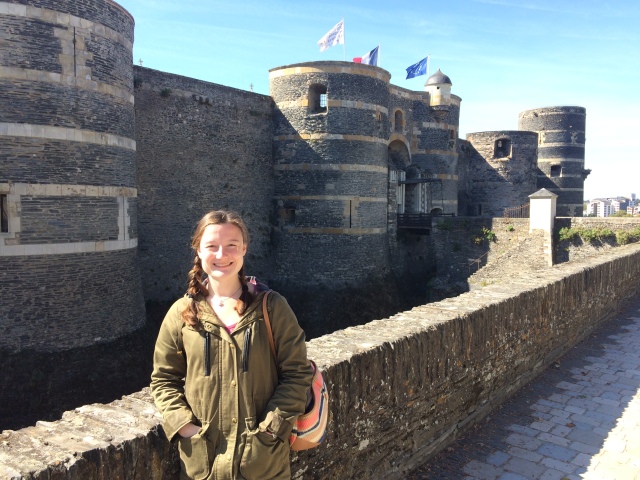
Angers

Angers was the first city in France that I visited as more than a tourist – I lived there during my first stint as a language assistant. I remember knowing nothing about it before I arrived, and now it’s one of my favorite cities in France! Located in western France, Angers is about 45 minutes by train to Nantes, and around two hours by train to Paris. It’s one of the greenest cities in France, so there are ample parks to explore, and you can explore the banks of two rivers, the Maine and the Loire (in fact, Angers is located in the département called Maine-et-Loire). It’s a modern French city with a tram line, but walking around you’ll discover a 12th century castle, half-timbered houses, and so much more. Check out my blog post here for recommendations of what to do while you’re in Angers! If you’re a soufflé fan, be sure to check out La Soufflerie for some delicious soufflés of both the sweet and savory kind.

Highlights: Château d’Angers, Jardin du Mail, Musée des Beaux-Arts, Maison d’Adam, Place du Ralliement

Young woman stands in front of the chateau d'Angers in Angers, France
The Chateau d’Angers

Dijon

This was my home the second time I was a language assistant. I moved from West to East, but maintained a similar distance from Paris by train. Dijon is located in the département of Côte-d’Or. Its region is Bourgogne-Franche-Comté (or BCF for the cool kids), which is well known for its wine and cheese. If you’re a fan of condiments, you might recognize Dijon from the mustard, and you’d be correct in assuming it comes from there! Centre ville is full of beautiful half-timbered architecture, but don’t forget to look up! The roofs are tiled in a unique way, unlike anything I’ve seen in France before. While I wasn’t able to take full advantage of my time in Dijon due to the pandemic (fingers crossed someone will come across this post at a point where it’s no longer a thing), I still found loads of things to do. You can find my recommendations here!

Highlights: Climbing the Tour Phillipe le Bon, Parcours de la Chouette, Lac Kir, Musée des Beaux-Arts

Young woman stands at the top of Tour Phillipe le Bon in Dijon, France with a view of the city behind her
The view from the Tour Phillipe le Bon

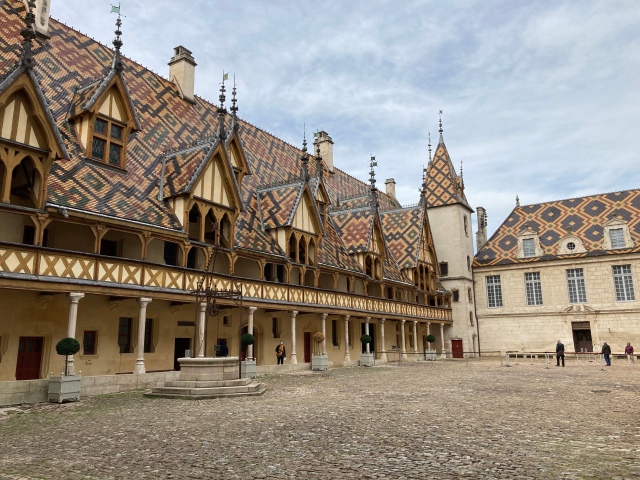
Beaune

A quick day trip away from Dijon is Beaune. Within 15 minutes you can be in this picturesque city, where you can quite literally stumble upon miles of vineyards (and run a marathon through them if you time it correctly). The main, and biggest highlight in Beaune is Les Hospices. You’ll see more of the tiled roofs like in Dijon, but in a much grander fashion. The building dates from 1443, and it was an active convent until 2006, so it’s full of regional history. If you’re into wine, be sure and book yourself a wine tasting while you’re there, too! Beaune is the perfect day trip from Dijon, and a great way to explore the region beyond the most well known cities. You can relive my day in Beaune to see what else you shouldn’t miss!

Highlights: Les Hospices, Parc de la Bouzaize, Musée du vin de Bourgogne

Les Hospices in Beaune, France
How could you *not* be impressed by these roofs?

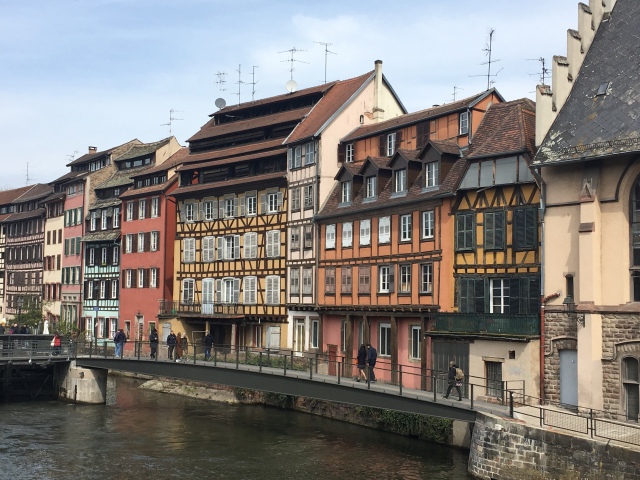
Strasbourg

Strasbourg is hands down my favorite city in France. Between the charming architecture of Petite France, the fact you can take the tram to Germany (yes, the terminus of one of the lines is across the border), and the amazing history of the region, there’s so much to see and do. Strasbourg is fascinating because the Alsace region has consistently maintained a unique individuality that differentiates itself from the rest of France. It’s also home to the EU parliament, which you can visit. I spent a weekend exploring, and it’s been a goal of mine to get back ever since. If you’re traveling through France during the holidays, Strasbourg is most known for its Christmas market – absolutely worth the visit if you time it right! Also, if you visit on the first Sunday of the month, all museums will be free!

Highlights: EU Parliament, Petite France, Barrage Vauban, Musée Alsacien, the Cathedral

Petite France in Strasbourg, France
Petite France

Lyon

Lyon is the second most populated city in France, and similarly to Paris, has its own distinct neighborhoods. An absolutely metropolitan city, you can get around using the bus, tram, or even metro, so getting around the city is a breeze. In addition to its ample history, fascinating museums, and spectacular views, Lyon is also known as the gastronomical capital of France. Prepare to eat well in Lyon! If you’re in France in December, you absolutely shouldn’t miss the Fête des Lumières. It’s a hot event, so book your tickets early (and hotels), but the festival is well worth it. My visit to Lyon only lasted 36 hours, and it wasn’t my favorite city to visit, but I’m glad I got to explore it!

Highlights: Parc de la Tête d’Or, Basilique de la Fourvière, Vieux Lyon

View from the Fourviere in Lyon, France
View from the Fourvière

Nantes

Also located in the Loire valley, Nantes is a perfect example of a French city that has blended the modern city feel with France’s rich cultural history. While not necessarily like all the other castles in the Loire Valley, you can visit the Château des ducs de Bretagne, a castle built in the 13th century situated right in the middle of a bustling city. You can also head to the Île de Nantes for the mechanical elephants – if you’re daring enough, you can pay to ride them as they walk around! Nantes also has its own airport if you’re looking to fly in/out of the area.

Highlights: Les Machines de l’Île, Château des ducs de Bretagne, Musée des Beaux-Arts

Mechanical elephant in Nantes, France
Mechanical Elephant

Rennes

Rennes is the capital of Bretagne, so there are ample museums and sights to get to know the history of the region. Wander through the historic city center to see medieval half timbered houses (notably in Place Sainte-Anne), and be sure to have some crêpes or galettes while you’re there – they’re traditional Bretagne dishes, and are also always delicious.

Highlights: Rennes Cathedral, Musée de Bretagne, walking along the canal

Traditional houses in the historic center of Rennes, France
Historic Center of Rennes

Rouen

The capital of Normandie, Rouen is situated along the Seine (yes, the same river that runs through Paris). Due to the architecture in much of the city, Rouen has an older feel to it, and it’s easy to get sucked into the vast history of the place. If you’re interested in the Joan of Arc aspect of French history, Rouen is the place to visit. It’s where she was placed on trial and ultimately burned at the stake so there are ample museums, plaques, and souvenirs centered around her. For sweeping views of the city, climb the stairs at the Gros Horloge, which is also a fascinating exploration of clockmaking and time keeping. I didn’t spend oodles of time in Rouen, but I have very fond memories of it. If you’re interested in day tripping out to the “coast,” Le Havre is an easy train journey away from Rouen.

Highlights: Gros Horloge, Cathedral Notre Dame de Rouen, Vieux Marché, Historial Jeanne d’Arc

View of the cathedral from the Gros Horloge in Rouen, France
View of the cathedral from the Gros Horloge

Poitiers

Moving into Nouvelle-Aquitaine, Poitiers has more of an administrative center feel, but makes for a good day trip if you’re around Angers or Nantes. The Musée Saint-Croix offers archeological finds from the region, and if you stick around until the sun sets, the Hôtel de Ville will be prettily lit up. There’s also a miniature Statue of Liberty in one of the parks if you want to find it! Speaking of parks, if you’re interested in theme parks, Futuroscope is close by to provide you with some thrills and excitement!

Highlights: Musée Saint – Croix, Cathedral Saint-Pierre de Poitiers, and the square near the Hôtel de Ville

Hotel de ville at night in Poitiers, France
Hôtel de Ville at night

Tours

Known as the “Garden of France” because of its numerous gardens/parks, Tours is a beautiful city (even the train station is architecturally stunning). Tours is easily walkable, and you can head out a bit to walk along the Loire to get away from the centre ville feel. An absolute must see is Place Plumereau for the half-timbered houses that pervade this region of France. I only did a day trip to Tours, so I’m not an expert by any means, but one perk of visiting this city is being able to say that you’ve *tour*ed it!

Highlights: Place Plumereau, Jardin Botanique de Tours, Musée du Compagnonnage

Hotel de Ville in Tours, France
Tours Hôtel de Ville

Toulouse

La ville Rose, Toulouse is located in the south of France. It’s a very student heavy city, but it’s also absolutely chock full of things to do and see. Whether you want to ride a bateau mouche on the Canal du Midi, explore the vast number of basilicas and churches, or wander through luscious gardens, Toulouse has it all. If space is your jam, absolutely check out the Cité d’Espace, which is home to a mock Ariane 5, and full of interactive exhibits all about space. Head to Place de la Capitole for a nice square where you can people watch, and admire the Mairie. For local food recommendations, try cassoulet! I did a lot in my return visit to Toulouse (which you can read about here), and still could return to do more. If you’re into medieval history, consider a day trip to Carcassonne as well. It’s easily accessible by train from Toulouse, and the fortress is fascinating to explore.

Highlights: Basilique Saint Sernin, Cité de l’Espace, La Capitole, Pont Neuf

La Mairie in Place de la Capitole in Toulouse, France
You can see why Toulouse is called La Ville Rose!

Bordeaux

We’re entering wine country now, and if viticulture is your cup of tea, Bordeaux is a must visit. It certainly surprised me with how much I enjoyed it, and it’s definitely at the top of my rankings for best cities I’ve visited. Bordeaux is a very easily walkable city, but there is a tram if you want to minimize your transit time between stops. If you’re curious about the history of the Aquitaine region, there’s the Musée d’Aquitaine which covers essentially the whole span of history in the region. You absolutely have to stop by Place de la Bourse to see the Miroir d’eau, though. If you head out right before sunset you can view it empty and fill, and watch as the reflections shift with the setting sun. For wine lovers, there’s the cité du vin you can visit for an in depth exploration on wine culture, and partake in a tasting as well (for a cheaper version of this, head to the museum of trade and wine). For some musings on Bordeaux, click here!

Highlights: Miroir d’eau, esplanade des Quinconces, Musée d’Aquitaine, la grosse cloche, jardin public

Young woman stands in front of the Miroir d'Eau in Bordeaux, France
Miroir d’Eau is well worth the visit at all times of day

Marseille

Marseille is a port city in Southern France, and full of rich history because of it. While I wasn’t a massive fan of Marseille (to be fair to those who love it, I managed to visit on two days with absolutely torrential rain), it has ample to do and definitely carries a different vibe from some of the other cities I’ve visited. If you’re searching for a view from up high, simply head up to Notre Dame de la Garde. You’ll be able to put into perspective how spread out Marseille is, as well as see how the area near Vieux Port’s architecture differs from newer neighborhoods. If you’re wanting to go for a walk along the water, head to Le Corniche, which runs from Vieux Port to Plage des Catalans. Be sure to bring a hairband though, Le Mistral (the name for the wind in Marseille) can be brutal! If you’ve got some spare time and really want to get out into nature, head out to Les Calanques, but this will take some time so plan for a whole day’s adventure. Here’s my breakdown of all the highlights I visited in Marseille!

Highlights: Vieux Port, Le Corniche, MuCEM, Notre Dame de La Garde, Boulevard Longchamp

Palais Longchamp in Marseille, France
Palais Longchamp located at the end of Boulevard Longchamp

Caen

Another Normandie city, which I mainly chose because of its proximity to Bayeux. It’s still chock full of history, especially WWII related material given the destruction wrought in Caen as a result of the war. As with many French cities, there’s a castle, and you can climb the ramparts for free. Walking around will give you a quintessentially French rooftop view, as well as a perfect view of the cathedral. There are two museums inside the castle you can explore as well. For some disjointed thoughts on Caen (and Bayeux), here‘s my post about my time there!

Highlights: Chateau de Caen, Musée de Normandie, Mémorial de Caen

View from the ramparts at the chateau de Caen in Caen, France
View from the castle ramparts

Bayeux

A perfect day trip from Caen (only 15 minutes by train), this is a top destination if you’re interested in WWII history. That being said, the main attraction in Bayeux is the Bayeux tapestry. You can spend as long as you want examining the tapestry, although the provided audio guide only lasts 25 minutes. For WWII history, head to the Musée de la Bataille de Normandie, which focuses on the Normandie beach landings. You can also visit the 13th century cathedral that has survived countless centuries and wars.

Highlights: Musée de la tapisserie de Bayeux, Musée de la Bataille de Normandie, Bayeux cathedral

Bayeux Cathedral in Bayeux, France
Bayeux Cathedral

Saint-Malo

A port city in Bretagne, Saint-Malo is a beautiful city to visit. I spent a weekend there, although I’d recommend not doing Saturday-Sunday if only because so much is closed in France on Sundays. Located along the English Channel, the Intra Muros part of the city is the oldest area. You can walk all around the ramparts for views of the Channel, the city within the ramparts, and the city beyond. Be sure to also spend some time on the beach to take in the sand, but the water probably won’t be warm enough for a dip. Like Marseille, Saint-Malo can get windy, so prepare for that. Be sure to try a Kouign Amann or a Nutella beignet while you’re there, as well! If the wind isn’t too bad, you can also look into the possibility of taking the ferry to Jersey/Guernsey for the day, or an overnight.

Highlights: Aquarium, Fort National (closed during the off season), the ramparts

Saint-Malo, France, from the ramparts
Saint-Malo from the ramparts

Those are my city recommendations! I know there are far more (and I’d love to hear your recommendations – I already have a small list going), but I can’t speak highly enough about exploring cities beyond Paris in France. I visited all these cities via train, and everything is well connected (download the oui.sncf app to easily purchase tickets on your cell phone, and be able to access your tickets easily on mobile). With a little planning, you can get from city to city easily without having to step foot in a car or a plane. Whether you’re looking to explore food, history, or cathedrals (of which there are many in France), I hope this list gave you some ideas! For reference of where all the cities are located, here’s a map with them all pinned. A plus!

1. Angers, 2. Dijon, 3. Beaune, 4. Strasbourg, 5. Lyon, 6. Nantes, 7. Rennes, 8. Rouen, 9. Poitiers, 10. Tours, 11. Toulouse, 12. Bordeaux, 13. Marseille, 14. Le Havre, 15. Caen, 16. Bayeux, 17. Saint-Malo

Things to do when you study abroad in London

As someone who spent a year studying abroad in London, and has subsequently returned several times, I like to think myself a bit of an expert on the city (at least, a little). With the possibility of study abroad opening back up, I thought I would use some of my experiences to collate a list of fun things you should try and do if you’re studying (or even just visiting) London! This is by no means a comprehensive list, and it’s based on my personal likes/dislikes, but I know how overwhelming it can be to get used to a new city, so I hope this can help a little!

Before I dive into my list, I wanted to start with a useful tip for studying abroad in London. The first thing is to download CityMapper. It’s a transport app and is oh so helpful when you’re still figuring out the tube (and even after you’ve memorized it, I still rely on it). It will tell you what lines to take, when the next tube is arriving, compare the tube to the bus, and tell you when certain lines aren’t running. It works in several big cities so you can use it if you travel around Europe while you’re studying, and even has some cities in Asia and the Americas! If you get a British phone plan while studying abroad, you’ll be able to access WiFi in the stations, so you can update the app while you wait (but it’s best to preload it just in case the WiFi doesn’t work).

Without further ado, here’s my list of things to do (in no particular order) when you’re studying abroad in London!

Visit the Museums

General entrance to almost every museum in London is free. That means that you can pop into them for five minutes, or decide to spend a whole day there. Special exhibits will cost money, but otherwise, you’re free to enter them as you choose. My personal favorites are the V&A museum (especially for their scones), and the National Gallery. They’re both museums in which you could get lost, but also ones that are so never-ending, you’ll discover new things at every turn. The National Gallery is more focused on traditional paintings, but the V&A has more of a mix of art ranging from different eras and different mediums. Other museum highlights include the Science Museum, Tate Modern, and the British Museum.

How to get there:

  • V&A Museum: Nearest tube station is South Kensington on the Piccadilly or Circle/District lines. This is also the stop for the Science Museum and Natural History museum, as well
  • National Gallery: Located in Trafalgar Square. Nearest tube stations are Charing Cross (Northern and Bakerloo lines) or Embankment (Circle/District lines)
  • Tate Modern: Nearest tube stations are Southwark (Jubilee line), Blackfriars (Circle/District line – located on the opposite bank of the Thames), and Borough (Northern line)
  • British Museum: Nearest tube station is Holborn (Central line)

See the Parks

Although London is a cosmopolitan city, it is full of greenery and parks. They’re scattered all over the city, but are perfect for an afternoon stroll, picnic, or a run to get some daily exercise. Head to Kensington Gardens to find the Peter Pan Statue, or have an afternoon in St. James’ Park, located conveniently between Big Ben and Buckingham Palace. If you’re in London during the holidays, make sure you head to Hyde Park for their annual Winter Wonderland. Other notable parks include Regent’s Park, and Greenwich Park (if you’re in Greenwich, you can visit the Royal Observatory and stand on the Prime Meridian).

See a Show

While I’m absolutely a theatre person (so this was top of my list when I studied abroad), seeing theatre while in the UK is a must. There’s the West End with impressive headline shows like Phantom of the Opera or Les Mis, but there are also smaller theatres all over the city. There’s the Old Vic, the National Theatre, the Globe, and the Royal Court to name some well known non West End theatres, although there are countless others. No matter if your preference is to see a play or a musical, be sure to indulge in some theatre while in London, you won’t regret it! You might even be able to see some famous actors trod the boards. When I was in London, I managed to see Daniel Radcliffe, David Tennant, John Boyega, Andrew Garfield, and Nathan Lane onstage!

Selfie with Daniel Radcliffe
My most prized selfie

Ticket tips: If you’re a theatre person like me, be sure to sign up for reduced rate tickets for 16-25 year olds at the National Theatre, and £10 PwC preview tickets at the Old Vic. You can also download the TodayTix app to try for daily rush tickets (typically at 9/10am in the app), or to see what’s playing. Some shows also do day seating, which involves queuing outside the theatre in the early hours of the morning (I would typically arrive around 5am) to then be able to purchase tickets when the box office opens for that day’s performance. You usually get great seats at a phenomenal price (£20/£25 typically). You can also get £5 groundling (standing) tickets for performances at the Globe!

I also highly recommend seeing a panto if you’re in the UK during the holidays. It’s a lovely British tradition, and a joy to behold (oh yes it is)!

Walk along the Thames

While the tube is an excellent way to get around London, don’t underestimate how walkable it is. One of my favorite walks in London is along the Thames. It’s a great way to orient yourself in the city, but also to see some of the best sights on foot. If you start on the banks of the Thames opposite Big Ben, you’ll walk past The Eye, The National Theatre, The Globe, Tate Modern, and more. If you get far enough, you’ll even get to the Tower of London. You can cross over the Millennium Bridge (yes, the one famous for being destroyed by the Death Eaters in Harry Potter and the Half Blood Prince) to access Saint Paul’s Cathedral. Walking along the Thames is a fun way to not only see London, but to get some steps in, too!

Young woman leaning against a railing along the Thames in London, England, UK. The OXO tower and Blackfriars bridge can be seen in the background.
You can even find some “beaches” along the Thames (although I wouldn’t wade too far into the water, if at all)

Watch the sunset on Primrose Hill

Primrose Hill is a heavily touristy spot, especially for sunsets, but the view is worth it. The walk up the hill is on an incline, but it’s not a long hike up by any means. You can sit on the grass and watch day turn to night over the skyline of London. It’s especially enjoyable with friends and a tin of Pimm’s! The nearest tube station is Chalk Farm (Northern line – be sure to catch the Edgware branch), and Primrose Hill is around a ten minute walk from the station. You can even precede your evening with a trip to the London Zoo, which is just nearby.

Sunset viewed from Primrose Hill
The view from Primrose Hill at sunset

Visit the Warner Brothers Studio Tour

If you’re a fan of Harry Potter, this is an absolute must. You’ll head up to Leavesden Studios and there you can see Harry Potter film sets, costumes, props, and more! I’ve been twice and still feel like I could return to discover new things. You need to prebook tickets so it’s not a spontaneous trip, but if you’re studying abroad, you’ll have ample time to find a date that works. If you’re curious what visiting is like, check out my blog post about visiting it during the summer here!

In addition to the studio tour, be sure to also head to King’s Cross for a photo opportunity at platform 9 3/4! While you can’t actually stand between platforms nine and ten (unless you have a ticket for a train departing from those platforms), there’s a conveniently set up luggage trolley further into the station. There’s usually a queue for the photo, but if you time it right, you might not have to wait too long!

Young woman standing in Diagon Alley at the Harry Potter studio tour in London
Mischief Managed in Diagon Alley at The Warner Brothers Studio Tour

Have Tea

While this is kind of a touristy thing as well, it isn’t everyday that you find yourself in London! I’m a big tea drinker, so I couldn’t pass up the opportunity to have a proper afternoon tea. There are so many places where you can sit down for afternoon tea, at every price point so you don’t need to splurge if you don’t want to spend a lot. I opted to splurge a little and had tea at Fortnum & Mason’s, but there are plenty of cheaper alternatives. The key bit of having afternoon tea is getting to indulge in not only a luscious pot of tea, but also in finger sandwiches, and more importantly, scones. There is little better than a fresh scone with clotted cream and lemon curd in my opinion, and I would happily eat them every day.

If you’re just after the scones (and I wouldn’t blame you), Caffe Nero does a pretty good scone with clotted cream and strawberry jam. As I’ve already mentioned, my personal favorite scones come from the V&A, but I’ll admit, it’s not the most practical location when you’re craving a scone! You can find tea everywhere, and wade into the debate of which brand is the best (PG Tips, if you’re reading this, I love you and my allegiance is with you).

Young woman holding a tea cup at Fortnum & Mason's in London
Tea really does make everything feel better!

Go to a Television Show Taping

In addition to being home to stage shows, London is also home to the filming sets for many panel, and talk shows with live audiences. If you’re studying abroad in London, and will be there for a time, you can sign up to be considered to be an audience member for a multitude of shows. Typically, you’ll select a handful of dates for which you’re available, and they’ll reach out with your assigned date if you’re chosen! When I studied abroad, I attended two Graham Norton show tapings (with Ed Sheeran and Harry Styles as musical guests), a taping for Mock the Week, and a taping for The Nightly Show. The two companies responsible for getting audiences are SRO Audiences, and Applause Store. Be sure to check their websites frequently if this interests you!

Graham Norton show set after a live taping
Taking a sneaky photo of the Graham Norton show set

Go to the Top of the Sky Garden

For a free panoramic view of London, be sure to visit the Sky Garden! Entrance is free, although you need to book a timed entry ticket in advance. There’s a cafe/bar at the top, in addition to the 360° view you’ll get. While it’s not the same view you’d get from The Eye, it’s cheaper, and essentially comparable!

Closest tube stations: Monument (Circle/District line), and Bank (Central, and Northern line with connection to Monument station). These stations are connected underground, but Monument is the closest. Don’t be fooled by the word “connection” though, it’s a decent walk from Bank to Monument (and Bank is not a fun station to change lines).

View from the Sky Garden in London
One of the many views from the Sky Garden

Walk Around a Market

Markets are a great spot to visit in London both for food, but also for fun oddities you might not find anywhere else. If you’re feeling peckish, head to Borough Market! If you’re wanting to go shopping you can visit Portobello Road on the weekend in Notting Hill, or Box Park for some trendy shops. For more second hand and vintage shopping, head to Brick Lane or Camden Market. There’s also the Columbia Road Flower Market perfect for fresh blooms.

Ride the Bus

As much as the tube is a fantastic way to get around London, it’s not very scenic. Riding the double decker buses gives you the opportunity to see the city from a different angle, and to familiarize yourself more with everything. I personally love taking the bus when I have the time, and sometimes the route is more convenient via bus (CityMapper is great for telling you what’s the quickest). Even if you don’t use it for regular transport, try the bus at least once if only for the experience!

See the Olympic Rings

London was host to the 2012 Olympics, and the rings, along with a massive park with facilities, are still there. Located in East London (you’ll take the Central or Jubilee line to Stratford), you can spend some quality time going for a walk around the park, see West Ham Stadium, and if you’re eagle eyed enough, find the Olympic Rings. When you’re done, you can head into the Westfield next door for some shopping.

Olympic Rings in Olympic Park in London
You don’t have to win a gold medal to pose with the rings, luckily!

Venture outside London

While there are a million things to see and do in London (I still haven’t crossed them all off my list), there’s more to the UK than just London. It’s worth exploring other cities for so many reasons, but it can make for slightly less stressful adventures when you only have to take the train rather than a plane. I certainly have more cities I want to explore in the UK, but here are some of my recommendations!

  • Oxford: Highlights include the Radcliffe Camera, Christchurch College, and the Bodleain Library. I’ve done Oxford both in a day trip, and over a couple of days.
  • Bath: Highlights include the Roman baths, Fashion Museum, and eating a Sally Lunn Bun! I went to Bath as part of a trip in tandem with Oxford.
  • Cambridge: Highlights include King’s College, punting, and the Mathematical Bridge. I’ve only visited as part of a day trip.
  • Brighton: If you’re keen to see the seaside, be sure to visit Brighton. Walk along the pier and enjoy a 99 flake, and visit the Royal Pavilion. It’s a perfect day trip from London, but you can spend more time there if you please. Brighton is also home to the UK’s biggest pride festival during the summer.
  • Edinburgh: It would be hard to day trip to Edinburgh from London, but spending a few days there is well worth it to explore Scotland’s capital. Highlights include: Edinburgh castle, climbing Arthur’s Seat, and the National Museum of Scotland.
  • The Lake District: Since this is a district, there’s more than one place to visit, but the scenic views of the Lake District are truly stunning. I visited Keswick as part of an adventure weekend through IFSA-Butler, but I’m very keen on returning up North to explore more.
  • Stratford-Upon-Avon: Home to the RSC and Shakespeare’s birthplace, this lovely city is a perfect getaway from London. You can see some theatre, indulge in fish and chips, and learn all about Shakespeare!

For heading outside the UK, you can catch the Eurostar to Paris from St. Pancras which will drop you off at Gare du Nord in central Paris. You can also catch flights to anywhere in Europe from the many London airports. Heathrow is easily accessible via the Piccadilly line, and London City airport can be reached on the DLR. The other airports will require a train or bus to get there.

Be a Tourist

As much as I like to blend into the scenery when I travel, there’s nothing wrong with indulging in the touristy things to do, especially in a city like London. I think it’s important to see as much as you can of a city, and sometimes that includes going to a specific location for an Instagram photo or to say you’ve done it, even if it’s beyond cheesy. Not all tourist attractions are created equal, though, so here’s my list of ones you should do at least once while studying abroad in London!

  • Take a photo with a red telephone booth
  • Watch the Changing of the Guards at Buckingham Palace
  • Visit the Tower of London (absolutely worth the price of admission, but allow ample time to visit the whole thing)
  • Hit up Piccadilly Circus, Leicester Square, and Covent Garden (don’t try to walk up the stairs at Covent Garden station if you decide to disembark there, though).
  • Let yourself get lost in the city. Since there are tube stations almost everywhere, you’re never truly lost, and you can always connect back to where you started. Walking is a fantastic way to get to know London, and to see things you’d miss if you took the tube to get somewhere.
  • If you want to splurge on a view of London, ride the Eye. Book your tickets in advance to minimize the amount of time you need to wait before getting your view.
  • Stroll through Notting Hill to admire the pastel houses
Young woman stands in a red telephone box outside Westminster Station in London, England, UK
London’s calling!

London is a fabulous city in which to study abroad. There are endless things to do and see, and its location makes it easy to explore the UK and Europe. I’m now several years on from my study abroad experience, and I still think about it all the time. I’ve been lucky enough to return to London on a few occasions, and I hope to be able to go back many more times. Here’s to exciting study abroad adventures, and let me know if I missed any London highlights!