Arrêté de Nomination

Hello again from your favorite “stressed out about moving to France” blogger! Okay, maybe not favorite, but a girl can dream, right? This process is still very much day by day, but things are moving along, so take that information and do with it what you will. As I promised to document my journey, here is the continuation of my progess, and what’s going on, in my journey of getting to France.

More communication! I got an email on 23 July from the rectorat de Dijon with some logistical explanations of the process, along with paperwork that I needed to fill out/have. This included an accusé de reception (a document I signed to accept my position), OFII paperwork (needed for the visa application), and my unofficial arrêté de nomination. I do want to clarify that not every assistant who heard from their rectorat got all of these documents – some got more, some got less so this isn’t in any way an indication of what all communication looks like, just what I happened to get! Anyway. It was very exciting to get another email from France, and to “know” of another person there who will be helping run the show once we arrive. I’ll admit that my heartbeat speeds up a little every time I see an email in French, but in a good way!

What’s an Arrêté de Nomination?

One of the most valuable pieces of paper that you will get when doing TAPIF is the arrêté de nomination. This is essentially your work contract. It’s needed for opening a bank account, (potentially) finding housing, and most importantly, for getting your visa. As I mentioned above, I received an “unofficial” arrêté (non-tampponnée). This means that it doesn’t have the official stamp from the DIRECCTE office that is needed to make this document valid for visa applications, or anywhere else where you need an official documentation of your work. If you are participating in TAPIF as an EU citizen, you don’t need the official arrêté to do the job since you don’t need a visa, but it’s always smart to have stamped documents while in France (the bureaucracy, my friends). Just because I’m still waiting for my official documentation, doesn’t mean that the unofficial arrêté is not valuable. Unofficial or official, it provides you with your schools, and which is considered your “principal” school. This is technically the school where you’ll have most of your contact, and where you should go first when you have a question. While you may have more hours at this school, I’ve got a 50/50 divide of my time (so far), so I should be divided with my time evenly at both the schools where I’m assigned.

What does an Arrêté look like?

In case you’re wondering if you’ve been sent your arrêté, scan the document for the words “arrêté de nomination.” This will be on the paperwork regardless of whether it’s the stamped version or not. It lays out the contract dates, the title of your position, and your school(s) where you’ll be teaching. I had received this information already, but the last time I did the program, the arrêté was the first time I saw my schools’ names! I think that’s typically how you find out your schools, but since this year is a little topsy-turvy, some of us got contact in other forms before the arrêté. The arrêté also provides email addresses, and telephone numbers so you can introduce yourself to your school (usually the principal will see it), but since they’re all on holiday now through end of August, the rush to email seems to not be there (for me, at least). I have edited out the names of my schools since I’m not there yet, but I thought there may be some curiosity about what an arrêté looks like!

Arrête de Nomination for TAPIF

As an update of where things are in the process, there’s still no word on travel to France for Americans or anything in relation to visas. The rectrice in her email said that she would send the official arrêté de nomination as soon as she had it, but due to previous communication, I’m not anticipating that before the end of August at the earliest. We did, however, get a date for when teachers will be back at work for when we could reach out to them, which is at least a milestone to put on the calendar. I would recommend, regardless of whether you get an official or a non-official arrêté first, that you print the arrêté and put in a folder of “documents to bring to France.” I’ll write a post about all the paperwork I’m bringing with me once I get closer to my actual departure (fingers crossed), but it’s always a good idea to have multiple copies of things, so starting early will reduce stress on that end.

That’s my update for now, but as always, I hope I’ll be back with more as I continue on in this journey! À bientôt! Xx

First contact!

It happened! I received an email on Saturday 18 July at 12:15 am (yes, I was awake when I received it) from the person in charge of language assistants in the académie de Dijon. I was surprised to be receiving any kind of communication over the weekend, but especially so since I had resigned myself to not hearing anything from France until September. It was definitely a pleasant surprise, and I’m not complaining!

The email was fairly lengthy, with information about the region, and what the next steps would be. The best part, though? I got my school placements! I’ll be teaching in a high school (lycée), and a middle school (collège) in Dijon proper! I’m absolutely thrilled to be able to have the experience of working with both levels in secondary, but even more so to know that I’ll be in Dijon itself. There’s no guarantee for city placement when you participate in TAPIF, and even though I had requested specifically a big city, I was a little worried considering there aren’t any *big* cities in the académie de Dijon, and I had read somewhere that many assistants end up in medium sized cities. I’m truly over the moon to be somewhere that’s well connected via trains and public transport, and I would be lying if I said I haven’t already started doing research into all things Dijon and fun day trips I could potentially take. Ironically, based on some preliminary research, Dijon seems very similar to Angers, just on the other side of the country! I’m excited to see how my experience with TAPIF this time around compares to last time (pandemic notwithstanding).

In addition to my school placements, I was given contact information for my prof référent at each school. Your prof référent is a teacher at your school who is assigned to help you (the assistant) navigate the process of being an assistant, and to help you get settled into the position. I immediately (or rather, next morning), reached out to both of them, introducing myself. I’ve already heard back from one, but not the other – not surprising though, considering it was the weekend when I reached out to them.

Unfortunately, this email did not include an arrete, so I still don’t have any official paperwork for the position. I was told that due to delays (virus related and not), that I should not expect to have my arrete before the 20th of August. That means I still have at least a month before that comes through, so the waiting game is still not over. I don’t need the paperwork to apply for a visa luckily (you do if you need one, though), but I still can’t officially move to France, find housing, or open a bank account without that official piece of paper. Not that my moving is 100% happening either, but I’m trying not to focus on that.

Now that I have my schools, I can officially (oof, I’ve said that word a lot in this) start scoping out housing. It’s possible that my school will provide housing, or have resources for me, but I also want to do research on my own in case they don’t (again, there are no guarantees with this program). Usually, the recommendation is to wait until you arrive in France to start looking for housing, and to just book yourself an AirBnB for a minimum of a week while you go out and search. That’s not something I feel particularly comfortable doing this year, given that I want to quarantine myself as best as possible after I arrive in France to do my part in keeping the curve flat. Last time I participated, I had secured a room in a foyer before my flight even left American soil, so I’m looking down that route again as a possible option. The flexibility with a foyer would allow me the option to find alternate housing if I wanted once I was settled and felt safe doing so. Obviously, I’m not going to be making any decisions now regarding housing, but it’s definitely something at the front of my brain.

There’s still a lot up in the air, but I’m so pleased to have received that email over the weekend. Even though this latest update may seem benign, it means that things are certainly moving. I’m still very much having mixed thoughts about the whole thing, but I will admit that when I got the email, I was very excited and buzzing about my placement – so much so that I couldn’t go to bed for another hour! I’ll finish this post with an outline of what to do once you receive contact information for your prof référent/conseillier(e) so if you’re in this boat, you can stress less than I did when sending my introductory email:

Emailing your contact(s) in France

Once you get contact information for your prof référent/conseillier(e), you should reach out to them as soon as possible. I wrote a decent sized email, but you can write as much as you’re comfortable with in your email. I sent an identical one to each prof référent, only specifying the school where I would be teaching in the body of the email depending on who would be receiving that particular email. I wrote my email in French, but received a reply in English from one of my two contacts. If you’re teaching at the secondary level, there’s a higher likelihood English will be used in communication, but if you’re comfortable, I’d recommend writing the first email in French. Here’s what I included:

Subject: Bonjour de votre nouvelle(/nouveau) assistant(e)!

  • Brief introduction of myself: name, age, where I live, whether I’d lived in France/visited Dijon before
  • Asking for any information that would be relevant to my preparation for the year as an assistant (anything in particular I should bring from home for teaching?)
  • Asking for recommendations for housing in the area/what previous assistants have done for housing
  • Previous relevant experience if you want to add it (for me, this was my past participation in TAPIF)
  • Signed off asking them to let me know if they needed any further information from me, and reiterating how excited I was to work at (insert school) in the upcoming school year!
  • If you’re writing in French, be sure to sign off with “cordialement” rather than a simple “merci”

There you have it! You don’t have to write a super long email, especially since you’ll probably have more questions based on their reply (I know I did). Ask whatever is most “urgent” for you to know now (such as whether housing will be provided, or if there are any recommendations), as opposed to something you can wait to discover (which bank branch you should use, or your hours). Considering that my first contact from them was in July, there’s still a lot that they probably don’t know, and things that will develop between now and my (hopeful) departure.

Once you’ve formulated your email, click SEND and you’re good to go 🙂 Hope that was semi helpful – I know I fretted over the content for a while, but I know that they expect these kinds of questions, especially in a first email. Just be yourself (corny, I know) and send that puppy off to France (electronically, of course).

Let the planning for French adventures continue! À bientôt!

The wait continues…

If you’re a theatre person, you’ll understand when I say that I feel like that bit in “I know it’s today” where Sutton Foster just belts out “the waiting, the waiting, the WAIIIIIIITING” at the moment. For everyone else, it’s a song from Shrek the musical and Fiona is singing about being stuck in her tower her whole life. My waiting is not that extreme, but it certainly does feel long. I made a decision to document my experience with TAPIF this time around more, and this is my attempt at doing so. I feel like it may be boring to read, but not only am I trying to get my writing skills up to snuff for whenever I can get to doing more (which hopefully won’t be too long from now), but also because this year’s program is taking place during such extenuating circumstances. We’re truly navigating uncharted territory, and while that’s always an element of that within the program, this is on another level.

This program is a lot of hurry up and wait, especially in the stages before actually getting to France, and this element has certainly been exacerbated by the current situation and travel restrictions. After clicking accept on my initial acceptance email at the end of June, there was radio silence* from the program until 14 July (Bastille Day, ironically). An update! Okay, more like a check in, but at least it was some kind of communication? It was basically an email letting us know that they’re monitoring the travel situation (nothing concrete there), and that our dossiers were being sent to France, and to expect communication from our schools either within the next two weeks, or in September. Yup, you read that right… SEPTEMBER. This is because the French will be on holiday from late July until the end of August, so if your arrete doesn’t come in before they leave, you’ll be on hold until September, which is an added stressor. Honestly, classic French behavior, but it does elevate the heart rate a bit. I do want to mention that this time frame is not abnormal during normal years – there are many assistants who don’t get their arretes until September, but usually the process starts earlier than mid-July. Now I’m just crossing my fingers and toes that my school will send me my arrete before they go on break to at least alleviate one element of this very lengthy waiting process.

Image of Promenade du Bout Du Monde at sunset in Angers, France
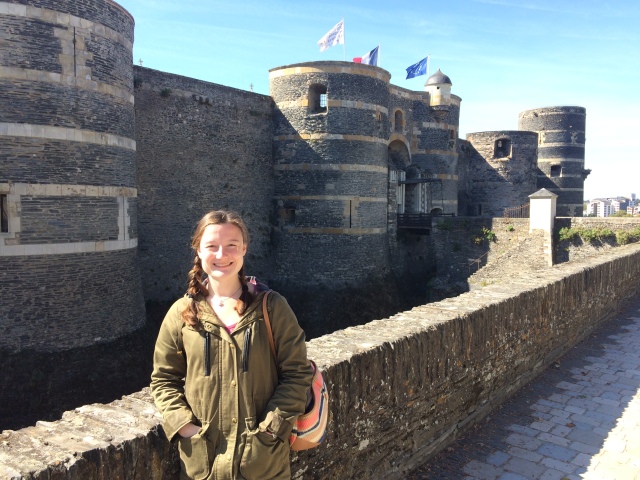
Notice the nervous excitement (and jet lag) on my face from my first time living in France

Usually, there’s all kinds of buzz on the Facebook group about when to book flights, when the ball will get rolling in terms of assignments, and people already planning for their many travels during the eight weeks of paid holiday (yes, eight weeks, pretty lush). This time, the group is filled with posts asking about the visa situation, quarantine regulations, and whether the program will actually run. Currently, work visas are not being issued, and are not under the exemption list of Americans allowed into France. As such, American assistants are not guaranteed entry in France to even begin the program at this point, which is definitely a cause for stress. I completely understand France’s perspective with not wanting to let citizens from the US in what with how the situation is being handled here, but at the same time, it was the French government that hired the assistants in the first place. Wishful thinking I know, but I’ve already had the rug pulled out from under me once with an international job this year, I don’t know that I could handle the disappointment of it happening again. As such, we’re all in limbo waiting for news from France, or any updates that will give clarity about our status as workers in France. I’m lucky that I don’t need a visa because of EU dual citizenship, but ironically, that doesn’t immediately allow me entry into France, either with the current travel restrictions and parameters. If things don’t change, I will have to fly via the country of my dual citizenship first to gain entry into the EU, then onto France, which is an added layer of fun in the journey of finding flights. Lastly, there’s a big question about quarantining – will it be required? Should I quarantine at the airport? Do I need to arrive in France two weeks earlier than planned to accommodate for that? I’m mentally preparing myself to quarantine currently because I don’t want to be the American that causes France to shut down entirely, but those kind of questions are evidence of how different this year of TAPIF is going to be, and the kind of questions participants are having to ask. It’s daunting enough to move to another country under the best of circumstances, now I also have to think about how I could provide food for myself during a two week quarantine without interacting with anyone (amongst other things). It’s enough to make you second guess your participation, and whether it’s a *smart* thing to do in light of everything going on in the US and the rest of the world.

I’m hopeful that my next update will contain information about my actual school placement, and hopefully better news on the situation of getting over to France. I’m already doing my research on acquiring masks (loads and loads of masks) for life in France, and for the 15+ hour journey over to Europe. If anyone has any advice on how to reduce my anxiety about the flight itself, I would gladly welcome it. I know that I’m approaching the situation with some ambivalence, and much as I want to be over the moon excited about going to France, I worry that I might not be doing the right thing by going over there. I may be escaping the way the US is handling the pandemic, but is that fair of me to escape to France and put the onus on them? That being said, I worry that if I stay at home in the US, I will still be unemployed, isolated, and with no change in my situation from where I am now. Going to France is directly in line with my goal of ending up in Europe, and working there, and I’d be lying if I said that I’m not thinking about the benefits of being there for that goal. It’s definitely a conundrum in some ways, and what I wouldn’t give for it to be more straightforward not only for me, but for everyone else taking part in the program. It’s very much a day by day situation, and that goes for my mindset towards it all as well.

So here we are, back to more waiting and waking up every morning hoping for an email from France. I’m not sure if this update is really beneficial for anyone or more just a brain dump of my own, but it’s occupied some time and deviated my brain away from all the (many, MANY) thoughts I’m having about France. I’m trying to remain cautiously optimistic amidst it all, and while I’m not getting my hopes all the way up, I’m not letting them fall either.

*Side note: I would just like to clarify that communication with TAPIF is fairly absent always. The lack of updates is not inherently due to the pandemic, and it’s important to know that this is the same situation I had when I participated in 18-19. Between my acceptance in April, and leaving for France in September, I probably got three or four emails, so this in no way is something new, but is definitely something that can be frustrating about the program… especially during a pandemic.

Longing to have those quintessentially French roofs as a view once more

TAPIF: Round Deux

Back in January, I decided to apply again to TAPIF (Teaching Assistant Program in France). The decision, if I’m honest, was prompted mainly by the fact that at my position at the time, I had very little PTO, and I was missing the vast amount of time off I had while being a teaching assistant. I filled out the application, advocated for myself for a placement in middle/high school (not sure I could handle primary again), and sent it in thinking it would be as a last resort for me. As we all know by now, 2020 had different plans in store.

I had my year all mapped out, and when a wrench was thrown into it, France began inching closer and closer as the viable option for me. I was laid off of work in March, and immediately began searching for jobs both locally, and internationally that would help further the plans I had laid out for the year. I was lucky enough to get an interview with a school in England for a student coordinator position (which I had applied for before sh*t hit the fan), which led to another interview, and ultimately a job offer. I was through the roof! This was going to be a chance for me to get my foot in the door working in England, and starting on my journey in international education. Unfortunately, not even a week after being offered the position, it was cancelled due to the pandemic, and the fact that there wouldn’t be a fall term at the school in England. I was absolutely devastated. I no longer had a job to look forward to, and there was no guarantee that the position would be open at a later date. How am I meant to begin a career in a field that may no longer exist? This was early May, and I was still waiting to hear back from TAPIF.

When I did the program during the 2018-2019 school year, I found out in early April that I had been accepted. By the beginning of June, there was still radio silence from DC, and it was looking like not only did I not have a future lined up, but that the program was up in the air as well. They assured us we’d hear by the end of the month, but with the entire world changing so rapidly, I wasn’t staking much claim in it, if I’m honest. Then, against all odds, on 23 June, I got my acceptance email! I’ve been accepted into the academie of Dijon at the secondary level. While Dijon wasn’t my first choice, it was my second, so we’re already off to a better start than the last time I did TAPIF. Not to mention, I got secondary, which is what I’ve always wanted, but I’m certainly excited about getting to try the program at a different level. PLUS, I’ll get to spend a lot of time coming up with mustard jokes and puns, which is a win in my book.

The joy inducing acceptance email!

I was honestly surprised at how excited I got seeing the email, and how much energy it gave me to know that I have something to look forward to, even if it isn’t entirely set in stone (who knows what could change between now and then). I’m definitely nervous about the travel aspect (it’s a LONG flight to France for me), but I’m trying not to focus too much energy on that at the moment, since it’s not like I’m getting on a plane tomorrow. Plus, I think that ultimately, I would feel safer in France if a second wave were to hit than I would in the US. I still very much want that position in England, and I do think that’s where I ultimately want to end up, but this may just be a stepping stone for me to get there. After all, being in Europe would make me closer to the UK and allow me to apply for positions and network over there more easily. I have accepted my place, and now I wait for my city assignment, which I hope will bring me as much excitement as the initial acceptance email gave me! Stay tuned for updates on that front.

There’s been a lot of mental reframing for me over the past few months about how things have been playing out, and what my life might look like going forward. Obviously, there are no guarantees, and I’m still immensely worried about a future in study abroad advising, but as of this instant, I can’t do anything about that so I’m choosing to focus on the fact that I do have a next step coming towards me at the end of the summer. That, in and of itself, is a massive positive for me, and gives me a little bit of relief (even if there’s some fear attached to it). Either way, I’m a little bit more excited about what’s coming for me, and looking at tomorrow (both literally and figuratively) with a bit of a wider smile… at least for now. France, it looks like I’m coming for you soon! Allons-y!

Reflecting on TAPIF

When I clicked accept on my initial acceptance email from TAPIF, I didn’t really know what I was getting myself into. I knew that I was going to France for seven months, and at that point, not much more beyond the age range I would be teaching. In a way, clicking accept was me running away from responsibilities post graduation, but in another, it was me wanting to keep exploring the world, and spend some quality time in France. Now that my time in Angers is done, I can safely say that the program wasn’t entirely what I expected it to be, but this didn’t make it a bad seven months either.

I was accepted to the académie de Nantes, which was not my first choice (although that point seems meaningless now), and placed in two primary schools just outside of the city of Angers (where you ask? Don’t worry I did too…) I remember being stressed at the cities (or communes according to wikipedia) in which my schools were located, as they were small, and definitely not what I had had in mind for my experience in France. Not the best start on paper. After my arrête came through though, I started being able to reach out to fellow future assistants in the area, and was fortunate enough to be able to arrange my housing before leaving. Things started looking better on paper.

After two planes, one train, and 18 hours of travel later one day in late September, I stepped out into the Angers train station with sun shining, and bags aplenty. At first, the city didn’t present as much, and it felt a little lacking in liveliness. Although Angers isn’t the most vibrant of cities, it still offers museums, a castle, and other little things to explore, which I was pleased to discover as the days went by of my living there. Before moving there, I thought Angers would just be another French city that nobody knew because it wasn’t Paris, and its size would be hindering, but when I think of it now, I think of the friendships I made, movie nights, tram rides, and adventures to the English Library when the wifi was out at the foyer.

First days in Angers and feeling happy from the sun (and a new place to explore)

Before moving there, I thought Angers would just be another French city, and its size would be hindering, but when I think of it now, I think of the friendships I made, movie nights, tram rides, and adventures to the English Library when the wifi was out at the foyer.

Working with primary aged students was another small hurdle in my TAPIF experience, in that I had applied to work with secondary students. That being said, most of my other work experience has been centered around working with younger children, so I waltzed into my schools on day one, confident in my ability to work with the kids, unaware of how unprepared I truly was. Working with kids, and teaching them English as a second language are two separate ball games, and the latter was one in which I’d never played a single minute, or had any training before being taken off the bench (did the sports analogy work?). I had naively imagined myself having small conversations with my older students, and working on vastly different things with each class, only to be met with many of my students not knowing how to count to ten, or how to tell me what their favorite color was. After that small crash to reality, I realized that working with these students would be less of the dream classes I had created in my head, and instead more of me having to sing baby shark twelve times in each classroom while we studied the family.

With all that in mind though, working with primary kids lends itself to some of the best stories, anecdotes, and experiences. I was always greeted by hugs and excitement (although some of the latter was more directed at me personally, and less at the prospect of going through an English class), and my personal favorite mantra of theirs was hearing them constantly ask me “but why won’t you speak French to us?” I got to make them laugh as I imitated emotions for them to guess, have them show me their newly lost (and sometimes grossly loose) teeth, and hear them giggle after they had (not so subtly) taped a fish to my back for poisson d’avril (The French April Fool’s). When I had my last day, I was presented with cards, drawings, chocolates (a lot of chocolates), and even more hugs, and even if the kids never remember me after this year, those reactions were enough to make me feel happy about my decision to come to France to help teach English.

The TAPIF contract is only 12 contact hours a week, which on paper, seems like a breeze and a half. Everyone’s hours get doled out differently, but I was still in a school building four days a week, and I was in a school building for more than those 12 hours. It’s true that the contact hours don’t require much from an assistant, and you can easily get by with little preparation, and lots of YouTube videos (sometimes, that’s all you want to do, honestly). In part, those hours are what you make of them. There’s nothing worse than showing up to a class with an activity that is too complicated, or no one enjoys, but on the other hand, it felt like such a success when I’d show up with something that would engage the students, or in which I could tell they wanted to participate. It’s easy to shirk off work as “only” being 12 hours, but it feels like so much more (and at the same time less, what with classes being in 30-45 minute chunks). Even if I don’t plan on becoming a teacher, there’s still that remarkably pleasing moment when something clicks with the students, or you can tell that they’re interested, and I’m glad I got to see that first hand throughout my time in the classroom.

Even if the kids never remember me after this year, those reactions [to me leaving] were enough to make me feel happy about my decision to come to France to help teach English.

Another worthwhile experience is the travel aspect of being in France. I was able to not only explore France really well, but also leave the country, and check some new countries off my list of places I’ve always wanted to visit (or even never thought of visiting). I regret not using my first two weeks of October/November holiday more wisely with travel, but after that I made sure to utilize every day of the six other weeks of vacation we were lucky enough to have as assistants (yes, eight weeks of vacation in seven months, you read that correctly). In addition to my two week adventure throughout France, I also got to explore Spain, Portugal, Malta, Disney Paris, London, Prague, and Berlin. It’s hard to regret such an experience when it meant I got to see so much of the world, and so much of one country.

Even when the going got tough, and my frustrations with French bureaucracy, or with the way I was being treated as an assistant were riding high, there were still those bright moments of being in France. Whether it was working with a French woman on her English using question word flashcards, dancing with the four year old I babysat to those good old Disney tunes, having my students ask me how to say the most random words in English, or staying in to watch Netflix and drink tea with a fellow assistant living almost next door, those shining spots are what I’ll take with me when I think about my time in France more than the ridiculous amount of paperwork required to do simple tasks, or the fact that lunch lasts 2.5 hours for everyone. I might complain about some of those idiosyncratic things, but in the long run, those things don’t really matter because it just means I learned how to navigate another country, and another culture, all while speaking another language.

If you’re thinking of participating in TAPIF, I can only say to go for it. It’s easy to get sucked down the rabbit hole of reading other people’s experiences through Facebook or blogs (maybe that’s why you’re here even), but it’s important to point out that everyone’s experience is different in TAPIF. There are so many variables (location, age-range of students, the students themselves, teachers, livability… the list goes on) that make up the seven months of being an English Teaching Assistant, so there’s no way to predict how those cards will line up for you. The only way to find out though, is to apply (or say yes if that’s where you are in your process). You never know what kind of amazing memories you’ll make.

It’s hard to regret such an experience when it meant I got to see so much of the world, and so much of one country.

Sunset from the Promenade du bout du monde in Angers, France
Sunset in Angers, and on my time in France as well

Things I miss about living in France

After being home in the US for two weeks now, I can definitely sense some differences between French and American society. I’ve been reflecting on my time during my contract since touching down stateside, and although I’m preparing a different post to discuss that, I thought I’d write a fun little blurb first.

I haven’t found it too difficult jumping back into the US (although not hearing French everywhere was a little weird at first), but that being said, there are parts of French life that I miss (and of course, some I don’t)- and some I wish would be implemented over here…

Public transportation

Something I know I remark about constantly, but it’s true! A lot of the larger cities in France (and even some of the smaller ones) have some form of public transportation. Meanwhile, the US can’t seem to really make it accessible to most, or at least, that’s the case where I live. In Angers alone, there were several bus lines that serviced suburbs (both schools where I worked were half an hour away from city center and I could get there by bus), and a tram line (with another being built). At home, I’m constantly aware of my having to drive everywhere, and how much more stressful, and sometimes tiring, it can be.

Train travel

Along with public transport, the access to trains in France (and a lot of Europe to be fair), and where they can take you, is unlike anything in west coast US. I miss knowing that I’m under a 10 minute walk away from the train station, and consequently, from an adventure. Being able to travel to so many places via train was so great, and I miss being able to take advantage of it. Not to mention, there’s no airport security stress, fear of not allowing enough time to clear security and check in, and just overall it’s a less stressful experience (in my opinion).

Baguettes, croissants, and pain au chocolats (oh my)

I would be amiss to say that I don’t miss classic French pastries, and the ability to get them whenever, and wherever. Being able to find a boulangerie in under five minutes is a pretty impressive feat, and I loved smelling fresh bread waft down the street if I timed my pastry buying just right. I miss having a baguette with every lunch (although I probably shouldn’t, for health reasons). I miss finding a La Mie Caline and getting their €2 breakfast deal, or their lunchtime menu. Really, I miss the food aspect of French life, and that should come as no surprise.

The history

Europe is lucky in the sense that their streets, buildings, museums, and culture is very richly steeped in history. France is no exception, and I loved learning about French history in the places where history happened (reliving Jeanne d’Arc’s trial in Rouen, seeing the famous tapestry in Bayeux, or la petite France in Strasbourg). There’s always more to discover, and I miss the feeling that comes with seeing a 12th century castle in the middle of town, and having people pay it no mind.

Meandering around

Along with the rich history, walking around cities in France feels so much different than walking around cities in the US. Even though there is modern architecture, it’s intertwined with older style buildings, cobblestone paths, and a sense that there’s more to the area than what meets the eye. I always found it calming to take a walk around Angers, and to run into the jardin du Mail, the castle, or even a new museum I didn’t know existed. I miss that sense of discovery when wandering, and even the impulse to wander that seems much weaker to me in the US.

Accurate Pricing

Even though I’m used to having to add tax when I pay for things in the US, part of me misses taking something off the shelf, and knowing exactly how much it’s going to cost me at the till because the tax is already built into the price. It makes things so much easier!

Sacred meal times

I miss the sanctity of eating in France, and the importance of taking your time to actually enjoy your meal. I don’t necessarily miss having two hours for lunch, but I miss the incentive behind it. There’s something reassuring about knowing you won’t be rushed to finish your meal at a restaurant, your café with your breakfast, or to eat that tasty dessert you’ve ordered because this is France after all. I find the attitude that food should be enjoyed, and given attention to, is a good one, and I miss the food reverence (for lack of a better word).

The French language

A large part about living in France, is hearing the French language (and having to use it) constantly. In the same way that it feels natural to hear and speak English at home, I was able to get to that point in France, and I sometimes miss hearing the melodic tones of French, or seeing a miffed French person do the classic puffer fish air blowing shoulder shrug move (if you know, you know). Even though it is an infuriatingly frustrating language to speak (between the masculine and the feminine, the silent letters, and ever growing argot phrases), that doesn’t make it any less beautiful to hear, and some days, I miss it.

Things to do in Angers

Since I’ve been here for a few months (seven to be exact today, ironically), I figured I would be remiss to not highlight the city where I live, and what there is to do here. Angers, located in the northwest region of France, is not nearly as large as cities that are famously known within France (there’s a reason many people haven’t heard of it), but it isn’t without its charm, and it also isn’t an absolutely minuscule city either (there’s a Starbucks so there’s that)… Along the Loire (in fact, Angers is located in La Maine et La Loire), there are a decent number of things to see, and it makes for the perfect day trip from Nantes or from some of the other surrounding areas such as Rennes, Tours, or Poitiers (you can of course do day trips to these locations from Angers as well if you so choose). Equipped with a train station, one tram line, and several bus routes, getting around town is a breeze, although the center part of Angers is easily walkable. I still wouldn’t say that I’m an expert in this city, but I do feel like I know it decently, so here are some of the highlights I would suggest if you ever decide to visit Angers!

Château d’Angers

Since Angers is part of La Maine et La Loire, it makes sense that it should have a castle. However, unlike other castles in the Loire Valley, Angers’ is not elegant, or refined (or at least, not in the way that one would expect from Chambord, or Chenonceau), and certainly not from the Renaissance. This is a 9th century castle, expanded in the 13th century, which gives it a thoroughly medieval look. You can walk along the ramparts, getting views of the Angers skyline, both sides of the river, and the castle gardens. It also houses the world’s largest medieval tapestry collection, which includes the “Apocalypse Tapestry,” depicting scenes from the Book of Revelation. Extra perk: it’s open seven days a week!

Le Petit Train Touristique

If you’ve only got limited time in Angers, this little train ride is a solid introduction to Angers, and allows you to easily see the parts of Angers on both sides of the river without doing a ton of hefty walking. It’s a 40 minute tour that runs pretty frequently, and lets you take in the scenery, while also hearing the history of the town (be sure to specify language if you need something other than French as the dialogue is projected throughout the whole car, rather than through individual headphones.) It starts and ends in the square in front of the castle, and next to the tourist office.

Le Petit Train Touristique in Angers, waiting to depart in front of the castle.
Go for a ride on le petit train and learn all about Angers!

Musée des Beaux Arts

The Fine Arts Gallery is located in central Angers, and has a fine collection of paintings that date from several eras. My personal favorite part of this museum is that scattered throughout, there are puzzles (mainly for children, but who says you can’t be a child at heart when you visit) of certain paintings and you can sit down and complete them! Some are quite easy but the difficult ones (the kind where the piece isn’t an actual set shape) are quite complex, but I enjoy that they’re taking art appreciation to a new, and fun, level. All the museums in Angers are open seven days a week, so you can pop in any day. They also have a nice cafe, and when it’s nice outside, a courtyard where you can enjoy their delicacies in the sun.

Puzzles are available to patrons of the museum of different paintings. Here I am attempting to finish the 100 piece one!
Hard at work on one of the puzzles available to do in the museum

Watch the Sunset from the Promenade du Bout du Monde

Right next to the castle, there is a lookout point at the end of the Promenade du Bout du Monde, or the walk to the end of the world. Although you don’t actually walk to the end of the world (that would be a pretty good claim to fame), you get a beautiful panoramic view of La Doutre, the side of Angers across La Maine. It’s especially beautiful at sunset, and is a popular place to hang out when the weather is nice.

Sunset over Angers as seen from the Promenade du bout du monde

Cathédral Saint Maurice d’Angers

Like many French cities, Angers wouldn’t be complete without a cathedral. A mix of Romanesque and Gothic architecture, the cathedral has beautiful stained glass, a grand organ, and a stone floor to accentuate the 11th and 16th century designs. It isn’t as ornate as other French cathedrals, but that doesn’t make it unremarkable, or unworthy of a visit.

Maison d’Adam

Also known as the “La Maison des Artisans,” this 15th century house is home to artisanal goods, made by more than 80 craftsmen from all over the Loire Valley. Here, you can find handblown glass, sculptures, woodcrafts, and many other fine handmade goods. Located right next to the Cathedral, and at the heart of historic Angers, this house is one of the oldest half-timbered houses in France. Whether you want to go inside or not, the outside is enough to marvel at, and it’s definitely worth seeing as you wander through the city.

Jardin du Mail

If you’re looking for a picturesque spot to enjoy your lunch, sit and chat, or just marvel at your time in France, le jardin du Mail is a perfect location for you. It’s a park located in centre-ville, complete with a gushing fountain, and pagoda, perfect for those glamor shots of the city. Although it may seem unimpressive, it’s a beautiful place to walk, and highlights the fact that Angers is one of the greenest (color wise) cities in France.

English Library

Something that I wasn’t expecting to find in Angers was an English library! It’s one of only two (I think) in the country, so we’re especially lucky to have it. Having it available to assistants means that for us primary assistants, we can easily check out children’s books for our youngest classes, or for supplementary material if needed. It also means that I was able to check out books for my own perusal while I was working, so I had something to take my mind off of work, and my eyes off of a screen. They also organize monthly pizza and games nights, movie nights, and other fun activities so if you’re missing hearing some English, it’s definitely worth heading over to check it out!

Musée Jean Lurçat et de la tapisserie contomporaine

Another of Angers’ museums, this one focuses on tapestries. It is housed in two buildings, one of which has a collection of various tapestries ranging from the 20th century, through to today (hence the contemporary part of the museum’s title), and other works, while the other resides in a hospital complex from the 12th century. The latter houses Jean Lurçat’s 1960s tapestry series, so along with the beautiful architecture of the building, you can also view very large, and exquisite tapestries that speak to the state of the world at the time. It’s not a large museum, so it doesn’t take too much time to see it all, but it makes a change from typical art museums. (Unlike the other museums of Angers, this one is located on the other side of the river, but only about a 20/25 minute walk from centre-ville).

Tapestries in the old hospital at the musée Jean-Lurçat

Musée David D’Angers

If sculpture is more your cup of tea than painting, the musée David D’Angers is just the place for you. Located just around the corner from the fine arts museum, this particular space is filled with sculptures from the renowned artist David D’Angers, who as the name suggests, came from Angers. The building itself is beautiful, with a glass roof that used to be the roof to an abbey, you’ll see statues, sketch works, and busts, all sculpted by David D’Angers, which makes the collection that much more impressive.

There you have it! Of course, there are more fun things to check out in Angers, but these have been some of my top things to do/see while I’ve been here. There are also neighboring cities accessible by bus that offer more to see and explore! Although Angers might not be the most “happening” city in France, I’m glad I was placed here during my TAPIF experience, and have enjoyed my time here.

Whatever you choose to do, Angers is a great place in France to visit, and well worth the trip! Even if you may not be able to fill a whole week up with activities, a day or two is more than enough to fully appreciate Angers. I highly recommend checking it out if you have the chance 🙂

CAEN you believe it (+ Bayeux)

Bienvenue en Normandie! Obviously, I was already partially there in Rouen, but Caen feels like you’re in true Normandie territory. I literally only had one day to explore as the day I left was a Sunday (and Easter Sunday to boot) so as we know by now, nothing was open. I had a jam packed Saturday, and here’s how it went down:

I woke up early to catch a train to Bayeux, which is only 15 minutes away from Caen, so very easily accessible. I walked straight to the Bayeux Tapestry museum, which houses the iconic tapestry for which the museum is named. There’s an audio guide that narrates each scene in the tapestry, and helps you navigate your way through the story. I found it very helpful, and a fun way to ensure that everyone can truly enjoy the tapestry. It’s very impressive to see it in person, and even more so when you think about everything it survived in order to still be here today (I mean, it was made 1000 years ago, and has survived through two world wars). There’s also an exhibit which discusses more about the tapestry’s history, along with the techniques used to create it, and the history of the contents within the tapestry. I wasn’t as excited by the exhibit (I personally think it should be before the viewing of the tapestry), but I was also rushing a bit to ensure that I got to the museum of the battle of Normandy before it closed for lunch (yes, you read that right, the museums close for two hours at lunch time). Even with my rushing, I still spent over an hour there, although the audio guide itself is 25 minutes.

There are three museums within the Bayeux Museum “complex,” but I only opted to visit two (if you know you want to visit more than one, you can buy a slightly reduced rate that contains entrance to more than one museum). The other museum I visited was the Musee de la bataille de Normandie, which is, as the title suggests, a museum dedicated to the Normandie beach landings, and everything that occurred afterwards in order to liberate Caen (and the rest of France). It’s certainly extensive, and it highlights every single beach landing that took place in early June (this year is the 75th anniversary of those same beach landings, as it happens). What I found most fascinating was the information about the two months that followed those landings. I feel like a lot of us learn about the beach landings and then the end of the war (without much in between relating to Normandie), but I was glad to learn of everything that truly went into liberating Caen, and then ultimately Paris. They have artefacts, and relics from those who served in WWII, along with providing great context for how important Normandie was in the outcome of the war. If you’re interested in any aspect of WWII, this is definitely a place to visit.

After the museums, I took a brief walk around the Cathedral. Remarkably, Bayeux was relatively unscathed following the war (the tapestry survived for one), so many of the structures are still original. I should’ve kept a list of all the cathedrals I’ve visited in this country because the number is probably quite large at this point. Bayeux Cathedral

Bayeux Cathedral

After all that sightseeing, I had a lovely tartiflette for lunch before hopping on the quick train back to Caen. Seeing as it was now after lunch, my time was limited so I set straight to visiting what I wanted to see. I walked from the train station to the chateau de Caen, which is a middle aged castle that sits atop a small incline, overlooking the city. Entrance to the ramparts is free, so you’re able to wander around as much as you like, and adore the views onto the city. It’s a large expanse, and with a lot of greenery, so it seems to be a place to picnic or hang out when the sun is shining (which again, it was doing quite beautifully while I was there). It was fun to climb up and look out at Caen, and as in many French cities, I love seeing the difference between modern rooftops, and the spires of older churches/cathedrals that poke out periodically. View from Caen Castle

Seeing ancient architecture amongst modern is always fascinating to me

Inside the ramparts, however, are two museums (for which there is a fee associated, but if you’re under 26, like yours truly, then it’s free!) There’s the musée de Normandie, which is a history museum of Normandie. The beginning of the museum is similar to many in that there’s a Neolithic age, Stone Age, and all that Jazz. It gets more interesting when the Vikings come into the picture, and then more so when they discuss what makes this region unique from others in France. There was also an “images of Caen” exhibit in the ramparts associated with the museum, which had paintings, photographs, and other images of the city throughout time, which was interesting to see how it has evolved! There was even a painting with one of the Louis’ (don’t ask me which one, I don’t remember, and there are too many of them) receiving the keys to the city!

The other museum is the fine arts museum, which offers two floors of paintings that span several centuries. I hadn’t originally planned on visiting it, but the combination of a free ticket, plus the Gilets Jaunes convening outside (it was a Saturday, typical), meant that I went inside to have a peek around. I wouldn’t say it’s a must-see, but I’m also not the biggest fine arts museum person (I have a limit, and I’ve done a lot this trip).

I certainly didn’t see everything in Caen, or even skim the surface of Normandie, but I’m glad I added it to my list of cities to visit. I can’t believe how quickly my two weeks went by, but just like that, my mini Tour de France is complete, and I can now check off so many beautiful cities from my ever growing list of places to visit.

One day in Rouen (plus a short day trip to Le Havre)

I’m up North now, in Normandie! It took a while to get here from Southern Bordeaux (three trains, and four hours to be exact), but that didn’t diminish my enthusiasm for exploring. Having only one full day here, I wanted to see a lot, and it is possible to hit most (if not all) of the big things here in one day, although of course, you can space it out over two so as not to feel like a race against the clock the whole time.

I started my morning off by walking through the Vieux Marché. If you come back later in the day, there can be a market of fish and meat set up. There are also brasseries and bars surrounding the square, as well as a modern church dedicated to Joan of Arc (more on why she’s so renowned in this area in a bit). Here, you can also see a vast array of the half timbered houses which litter the city. Rouen definitely felt like one of the older cities I visited on this trip, and these houses are partially the reason for that feeling. View of Rouen from Gros Horloge

Half timbered houses blend in with modern architecture

Just a few minutes walk away is the Cathedral Notre Dame de Rouen. Much like the cathedral baring the same name in Paris, the facade of the one in Rouen is equally ornate. There’s a spire, and several detailed carvings anywhere you want to look. The inside is vast and large, although to me, it was not nearly as impressive as the exterior. I don’t know how often the bells ring, but I had dinner in the square in front of the cathedral, and listened to the bells for a solid 7/8 minutes, and I would highly recommend it as an experience in Rouen. Cathedral notre dame de Rouen

Cathedral Notre Dame de Rouen

Just around the corner, you can find the Historial Jeanne d’Arc, a modern museum dedicated to the retrial for Joan of Arc following her death. Joan of Arc was put on trial, and ultimately burnt alive in Rouen, hence her importance in the city. This museum focuses on the retrial that ultimately “exonerated” her, and proved that her first trial had been heavily biased. The museum has five rooms through which you walk, and then sit to watch a video presentation in each one, as you follow the retrial chronologically. The videos are very well done, and it’s a creative way to tell the history. It’s difficult to explain, so I’ll leave it at the fact that you have to see it to understand what I mean. They also have an audio guide that translates the videos as you watch them!

Since at this point it was lunch time, and some attractions take a lunch break as well, I decided to walk by the palais de justice. This building has elements from the 14th century, and although I didn’t go in (I’m not even sure you can), the exterior is definitely something to be seen. You can tell it’s from a similar period to the rest of the old part of town, and it made me wonder what the inside must look like! This was definitely a quick stop of mine, but if you appreciate old architecture, it’s worth a stop. Palais de Justice in Rouen

The architecture can transport you back in time (if it weren’t for the modern car sitting out front)

Following along the old history trail of Rouen, I next visited the Gros Horloge, or the big clock. It’s hard to miss it, and it definitely lives up to its name. The clock offers admittance to climb up the belfry, as well as to see the inner workings of the clock itself, all while listening to an audio guide that explains how it all works, and what the significance of this clock was. There are “some 100 steps,” but when you reach the top, there’s a panoramic view of the city. It’s important to note that this attraction closes from 12-2, so you have to visit it either before or after lunch (I opted for after), and that only 30 people are allowed up at a time, so the earlier you get there, the more likely you won’t have to wait to start climbing! Gros Horloge in Rouen

Gros Horloge and Belfry Tower

Panoramic view from the Gros Horloge
View of the cathedral from the top of the Gros Horloge

After climbing all those steps, I decided that it would be a good idea to walk almost 2 miles to the jardin des plantes, way on the other side of the Seine. The old city of Rouen is fairly concentrated in one area, so of course, this one attraction had to be super far out… it seems to me that a lot of cities have these kinds of gardens, but this one in particular is massive (I know, it feels like I say this about every garden I visit). You could easily spend several hours here, or even potentially get lost! There’s a play area for kids, green houses, pétanque and basketball courts, grassy areas, and so much more. I feel like I barely scratched the surface and I wandered around for almost an hour! It’s obviously a place to go when the sun is out, and it was a lovely 74 (or 24 for the Celsius speaking world), complete with shining sun, and accompanying minor sunburn.

To save time (and myself from getting too sweaty), I took the “metro” back into the old part of town. I use quotation marks because it does go underground, but it’s more a tram that does so, rather than a full on underground metro service. In fact, when it does go underground, it really isn’t that far down, but it’s still a good form of transport! Most of the stops seem to be on the opposite side of the Seine from where all the historical things are, but I would highly recommend it for getting to and from the jardin des plantes, especially if you’re pressed for time or the sun is too hot!

If you still have more time in your day after that jam packed schedule, you can also visit the tour de Jeanne d’Arc, the tower where Joan of Arc was held prisoner and faced trial. You can also ask the tourism office for a Joan of Arc passport to follow more of her “steps” as you discover Rouen.

There’s also the Fine Arts museum, along with seven other Rouen museums whose permanent collections are now free to the public, so if you’re stumped for things to do, there’s no shortage of museums! I only visited the Fine Arts one but let me tell you, it is FULL of paintings, and labyrinth like so trust me when I say it feels like it’s never ending. It almost becomes a game to find your way out! That being said, there are a lot of beautiful paintings and sculptures, and something for truly every taste.

• Day trip to Le Havre •

Since I had the better part of a day before my 6pm train to Caen, I decided to take a short half day trip to Le Havre. Trains are pretty frequent and the ones I took clocked in at a little under an hour each way. Le Havre, like many cities in Normandie, had to rebuild after WWII, and chose to rebuild in a modern way. As such, this is reflected in the architecture, and even though there is still a remaining old quarter, much of the city feels new and modern.

Since I was only there for four hours, I did what was easily accessible by foot from the train station. As such, I visited the musée de l’armateur, which is an art museum in an old house where merchants resided, and which was used as a trading office. It’s on five floors, and you’re given a 100 page booklet filled with information regarding every piece in the museum. There’s a lot, but it’s an interesting visit.

I also visited two churches while there. The cathedral, which survived WWII, and is one of the oldest buildings in Le Havre, and l’église de St. Joseph, which is shaped like a lighthouse. The inside of the former is currently being renovated, while the latter is filled with stained glass all the way up to the top. Eglise st Joseph in Le Havre

Eglise de St. Joseph – that definitely looks like a lighthouse, right?

There’s also a large shopping center located near the docks. It’s just across from the train station, and offers a view of a marina, and the large harbor. The sun was shining while I was out, so it made everything that much more beautiful. I had wanted to do the jardin suspendus but unfortunately they were a little too far out for me to hit and still make my train. Even with that though, it was still a great four hours, and I’m glad I ventured beyond Rouen.

Definitely not being bored in Bordeaux

Is my title punny enough for you?

Moving along through France, I couldn’t avoid wine country, and that leads us straight to Bordeaux (I should say whether you’re a fan of wine or not, this is still an interesting place to visit). It took me 2.5 hours via train from Toulouse, but it definitely didn’t feel that long. The center of town is a bit away from the train station, so my hostel was a half hour walk away. Once I got in, I headed out to dinner, and it quickly started pouring! I seem to have bad luck with the skies opening up on this trip!

My only full day in Bordeaux was a beautiful one, with the sun shining, and temperatures high enough to go out without a scarf (gasp, I know, but the French are still wearing one anyway, go figure). I started out the morning with a visit to the Cathedral, which seemed somewhat more poignant following the fire at Notre Dame the night before. I found the architecture outside to be of more interest to me than what was inside but that being said, the stained glass windows always catch my eye.

Bordeaux is a fairly easily walkable town, so I next walked to la grosse cloche, which is a big bell, although it also has a big clock on its side as well. The time is accurate although the date read in June, so not 100% perfect, but it’s still a fun thing to see randomly as you walk through town. La Grosse Cloche in Bordeaux

La Grosse Cloche

As you walk along, there’s also a Basilica, although I only saw the outside of it so I can’t fully attest to its “cool” factor. However, the exterior is beautiful, although not as striking as the basilicas in Lyon or Marseille that I’ve seen so far on this trip.

I also took some time to learn about Aquitaine’s history at the Musée d’Aquitaine. It was a seemingly never ending museum that touched on the history of the region from prehistory all the way to the 21st century. It was definitely impressive to see so many artifacts and relics of history, as well as to see how old this area of France truly is! At one point, I did stop reading the information cards and just started looking because it got to be a bit too much… (additionally, the English translations stop once you enter the Middle Ages, and don’t start back up for a while, which could’ve contributed to my lack of willingness to read as well).

Since the weather was so lovely, I had a picnic on the esplanade des Quinconces, or at least, on the Quai beneath it and overlooked the water as I basked in the sunlight (you can also partake in the very French hobby of people watching). As I was so near, I went over to the jardin public, which is a large expanse of park (a lovely escape from the bustling city life), and even contains a botanic garden! I believe the fine arts museum is also housed in the garden, so there are a multitude of things you can visit there! I love the big parks that exist in big cities here, and the fact that so many people visit and spend time in them.

The thing that kind of made the biggest impression on me in Bordeaux was this thing called the miroir d’eau. It’s a large water pond that serves as a reflecting pool for the buildings surrounding it (although I should say it empties and fills with water so sometimes it’s just a reflective surface). It’s both a play thing for people young and old (who doesn’t get a kick out of splashing through not even ankle deep water), and something beautiful to admire. It’s worth seeing it during the day and at night to truly get the full effect. When the lights on the buildings turn on after sunset, it’s really a sight to see, and makes for some stunning photographs. Many people gather for the photo opportunity, and just for the pretty sight. Miroir d’Eau by day

Miroir d’Eau by day

Miroir d’Eau by night

Seeing as this is wine country, I would’ve been remiss to not at least taste a small sample. There are two museums for wine: cité du vin (which is very modern, and apparently takes a lot of time to explore), and the museum of trade and wine. I opted for the latter, both due to its smaller price (only €5 at a reduced rate!), and it seemed less intense. For the entry fee, you get to explore some wine caves that discuss the history of the wine industry in Bordeaux, which is quite extensive! It was super interesting to learn about the way wine used to be bottled, how it was traded, and its significance to the area. Moreover, the museum itself is situated in an old wine merchant’s house, so you’re actually stepping through history. After your self guided tour through the two caves, you’re treated to a wine tasting. Having got there earlier in the day, I got essentially a private information session about wine in Bordeaux, and I learned a decent amount. For instance, did you know that the wines are named after grapes (i.e. Cabernet Sauvignon, Merlot…)? Maybe you did, but I certainly didn’t! Bordeaux has six main grapes, three red and three white, as well as six wine production regions. I got to try two wines: a claret, and a red wine, as well as a chocolate covered wine dipped dried grape! I’m not the biggest red wine fan but I actually really enjoyed the claret, and I’m proud to say, drank the whole sample! I may not be a wine connaisseur, but I certainly felt sophisticated doing a wine tasting, and now I know what to look for when I’m testing out what wines best suit my palette. It was honestly a great experience and it was well worth the entry price!

Another highlight of my days in Bordeaux was the fact that I got to meet up with a fellow alumna from Scripps! I don’t mind solo travel, but it becomes that much more enjoyable when you get to do things with other people, and when you have someone to talk to throughout the day! I’m not disparaging the other cities I’ve visited, but it’s been super fun to have a travel buddy, even if only for a day and a half.

That was my Bordeaux adventures! Other interesting things to see include all the portes (doors, sometimes more like giant gates), that are around the city’s circumference, and I’m sure they once held significance regarding entering and exiting, but they’re fairly elaborate and it’s almost comical as they just stand amongst all the modern architecture. One such example is the Porte Cailhau.

I’m headed up North for the last leg of my April holidays, but so far, the cities I’m visiting have yet to disappoint me, and I’m pleased with all I’ve been able to achieve!